Technology

A data-driven look at fuel savings, battery degradation, and net CO2 impact over a 10-year ownership period.

In an industry that rarely slows down, memory can be a powerful engineering tool. Not in terms of nostalgia, but in perspective. Many of the activities that constituted daily operations have been so deeply transformed that new generations of engineers may never have experienced them before.
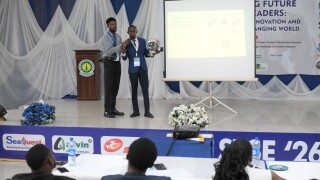
A smart safety helmet with physiological monitoring, gas detection, and real-time location tracking for emergencies was the winning concept at this year's SPE Students Technical Symposium and Exhibition.
-
 What will competitiveness look like in our industry in 10 or 20 years from now? What novel pathways might we envision to restore the natural environment, while creating shareholder value and enhance our license to operate? How can you serve as a potent catalyst for positive change?
 -
The oil industry has not treated reservoir crude oil with the same degree of rigor as it does reservoir rock formations. Reservoir fluid geodynamics is a new technical discipline that accounts for hydrocarbon compositional redistribution and phase change in reservoirs in geologic time.
-
Most petroleum engineers understand that engineering calculations involve the properties of fluids. “Fluid” is a term used to describe gases and liquids. An equation of state is nothing more than a fluid model.
-
An overview of two novel applications of the capacitance model, including its implementation during the primary production period and in gas reservoirs.
-
Anytime strict hierarchical structures are shaken, people like you and me have an opportunity to change them. To build a new paradigm.
-
A quick overview of CCS and the challenges in its application.
-
Shutting in a well in the oil and gas industry is not like locking a house without a tenant; turning the tap off is akin to demolishing the house in many cases.
-
Water-in-oil emulsions cost millions in maintenance, reduce oil recovery, and create excess carbon. These economic and environmental burdens may finally be resolved.
-
The evaluation of waterfloods often is focused on issues at the well level. But each well is only one part of a bigger system. For this reason, it is important to diagnose a waterflood from multiple viewpoints: the field, pattern, and well levels.
-
Baker Hughes is joining the ranks of other manufacturers using spare 3D printers to make plastic face shields and other gear to protect healthcare workers from the deadly coronavirus.