Technology

A data-driven look at fuel savings, battery degradation, and net CO2 impact over a 10-year ownership period.

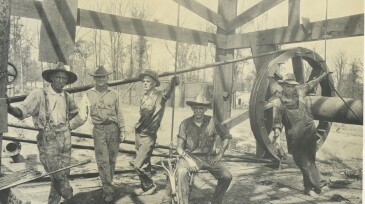
In an industry that rarely slows down, memory can be a powerful engineering tool. Not in terms of nostalgia, but in perspective. Many of the activities that constituted daily operations have been so deeply transformed that new generations of engineers may never have experienced them before.
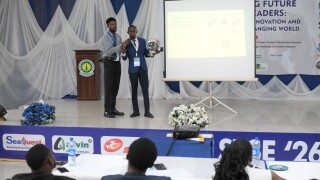
A smart safety helmet with physiological monitoring, gas detection, and real-time location tracking for emergencies was the winning concept at this year's SPE Students Technical Symposium and Exhibition.
-
 Change is inevitable, but the resistance to it, especially in cultural and monetary contexts, can be profound. The deep-rooted dependency on crude oil and internal combustion engines exemplifies this inertia, raising questions about how we might transition to new energy sources without overhauling our entire infrastructure.
 -
A 2D model of catenary trajectory design is presented. The solutions of the catenary design are in closed form and do not demand thorough numerical estimations. A traditional arc well design is also included to compare the hookload with the catenary trajectory well design.
-
This article provides an overview of common damage caused by vibrations, the most prominent vibration modes, mitigation methods, and design principles used to diminish vibration effects.
-
The oil and gas industry is one of the few examples on a global scale of how the need for further production improvement pushes professionals to customize existing models. Physical models are often reworked in order to expand their use in various industries. This article examines ten equations that help drive the petroleum industry.
-
Lithium-rush miners are flocking to Arkansas more than 100 years after an oil discovery in the Smackover Field.
-
In the final part of this three-part series, we extend our learning of Part 2 to the multivariate model and train a single model to predict three outcomes: oil, gas, and water.
-
This article focuses on the introduction of one of the flow-network-based models called GPSNet that has growing popularity in the literature and shows promising results during our proof-of-concept applications.
-
In Part 2 of this three-part series, we dive into a practical example using the production data of Equinor’s Volve field data set.
-
In Part 1 of this three-part series, we use long short-term memory (LSTM), a machine learning technique, to predict oil, gas, and water production using real field data.
-
Explore the history of Howard Hughes Sr., inventor of the two-cone roller bit, in Part 1 of this two-part series highlighting the Hughes family legacy in the oil and gas industry.