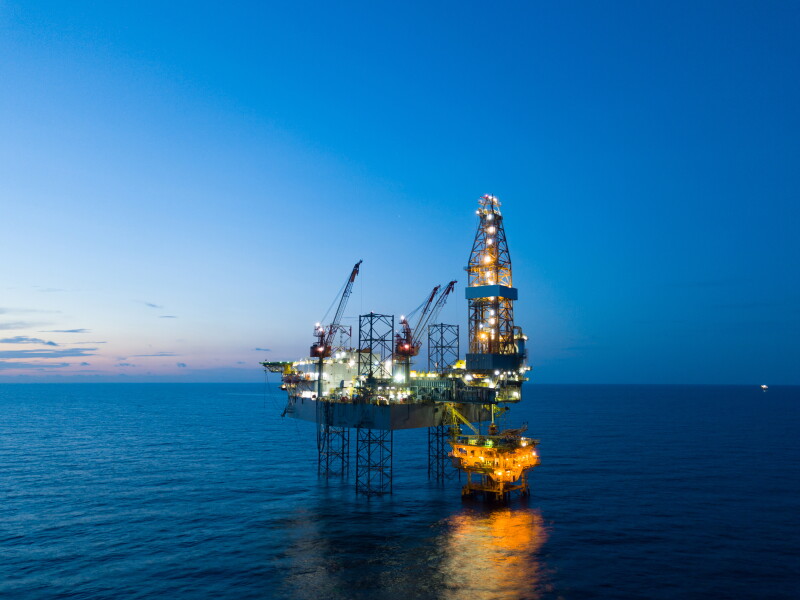
As oil and gas exploration pushes into deeper waters and hotter reservoirs, operators face immense pressure to ensure the reliability of subsea equipment. In these high-pressure, high-temperature (HPHT) environments, pumps, valves, and control systems rely on seals, insulators, and connectors engineered to withstand extremes where traditional materials fail. Recent advances in thermoplastics and integrated harness assemblies demonstrate how the smallest components can redefine offshore operational integrity.
The search for hydrocarbons beneath the seabed has always presented challenges, but today’s high-pressure/high- temperature (HP/HT) wells introduce a new level of difficulty. Every piece of equipment, no matter its size, must endure conditions that exploit any weakness. At depths of several thousand meters, immense pressures can distort metal housings and force fluids through the slightest imperfection in a seal. Below the seabed, temperatures can exceed 250°C, compromising the strength of conventional polymers and accelerating metal corrosion. When combined with a mixture of water, gas, and corrosive chemicals, this environment leaves no margin for error.
The High Cost of Failure in Subsea Operations
Offshore, equipment failure is not just an inconvenience; it's a catastrophic event. On land, repairs are manageable. At sea, they require heavy-lift vessels, remotely operated vehicles (ROVs), or specialist diving crews, causing costs to spiral daily, if not hourly. A stalled electrical submersible pump (ESP), brought down by a failed connector or a compromised insulator, halts production from the entire well. In a high-producing field, the revenue lost in just 1 week can surpass the annual budget of smaller projects.
Reliability is intrinsically linked to safety. Blowout preventers (BOPs), control pods, and subsea valves are critical barriers. If a seal loses its integrity or an electrical termination is weakened by moisture, the system’s ability to respond in a crisis is compromised. The consequences extend beyond a single well, placing reputations, regulatory compliance, and public trust at risk.
In a recent collaboration with a global energy technology company, Greene Tweed worked alongside an OEM to deliver pressure-ready electrical harness assemblies for a BOP control system. These assemblies combined Seal-Connect® connectors with sealed, booted splices to protect terminations from contamination and signal loss. This innovative design was subsequently validated through rigorous signal and pressure testing, proving its resilience under the harshest conditions.
When Traditional Materials Reach Their Limit
For years, the offshore sector depended on a familiar range of metals, rubbers, and polymers that performed adequately in shallower, less-hostile wells. However, in the demanding HP/HT environments operators face today, these materials are no longer sufficient. What was once considered dependable is now being questioned.
Metallic components corrode when exposed to sour gas and aggressive brines. Elastomers lose their resilience after prolonged exposure to high temperatures and pressures. Conventional polymers soften, creep, or fracture as conditions intensify. These changes may be subtle at first—a tiny crack, a gradual loss of elasticity, a dip in electrical resistance—but they can initiate a chain reaction leading to system failure.
ESPs highlight this vulnerability. Located thousands of feet downhole, ESPs are often the only means of lifting hydrocarbons from a reservoir. Their motors, stators, and connectors face relentless heat, pressure, and fluid exposure.
Traditional polyimide insulators have proven inadequate, allowing water to creep in and break down the insulation. This brings the pump offline, halting production and driving up costs. The imbalance is clear: a low-cost component can disable equipment worth millions, and pumps designed to run for years can fail in months. The conclusion is that the old material set has reached its limits.
Redefining Performance Through Material Innovation
When legacy materials can no longer perform, the industry must innovate. Pushing equipment into deeper and hotter environments is not feasible if its smallest parts cannot keep up. A leaking seal or a cracked insulator can bring down an entire system, proving that incremental fixes are not enough. Redefining performance begins at the material level.
The transformation is evident with ESPs. For years, these pumps relied on polyimide insulators, which had significant limitations. Machining was slow, design geometry was constrained, and water ingress was a constant risk. The introduction of cross-linked PEEK changed the landscape. This advanced thermoplastic maintains its insulation properties at temperatures between 260 and300°C and can be molded into complex, watertight geometries.
Greene Tweed’s Seal-Connect® line combines this material innovation with engineered sealing, using high-performance thermoplastics like Arlon® 3000XT to provide durable seals, stable electrical properties, and lower weight for demanding HP/HT service.
Once installed, the improvement was undeniable. Pumps ran longer, resisted moisture ingress, and delivered consistent performance. The economics shifted, with ESPs now treated as reliable assets rather than consumables. Costs dropped as equipment lived up to its intended design life. This success demonstrates that rethinking polymers gives engineers the freedom to build components capable of surviving HP/HT stress.
The Importance of Systems Thinking for Subsea Reliability
Even the most robust material can fail if the system around it is flawed. Offshore reliability is never the product of a single part; it depends on how components are integrated and protected within an assembly. Subsea control systems are a prime example of this principle.
BOP pods serve as the ultimate safety net in drilling operations. Early designs often left electrical terminations exposed, with disorganized wiring creating opportunities for contamination. As fluids found their way inside, signal integrity would fade, compromising both reliability and safety. The solution was to deliver complete, sealed harness assemblies instead of loose wires. By sealing, labeling, and testing the assembly in advance, installation becomes faster, servicing is simplified, and reliability is proven through rigorous testing.
This systems-thinking approach removes opportunities for contamination, simplifies maintenance, and extends service life. A well-designed harness does more than tidy up wiring; it changes the reliability profile of the entire control system. True resilience comes from treating the system as a coherent whole rather than relying on individual components.
Extending Equipment Longevity: An Economic and Sustainability Imperative
For operators, longevity translates directly to production and profitability. When the global energy technology company developed its control system, it knew electrical integrity was paramount. By introducing sealed harness assemblies, the system maintained signal integrity under repeated pressure cycles and resisted contamination, resulting in a control pod that operators could trust.
Sustainability adds another dimension to this imperative. Every intervention offshore requires vessels, fuel, and manpower, each with an associated carbon footprint. A connector that lasts 5 years instead of 2 avoids multiple service calls, saves emissions, and reduces waste. Longevity now influences both economic and environmental performance, and regulators and investors are demanding proof that assets can endure. Reliability has become a measure of responsibility as much as an engineering achievement.
Looking Ahead: The Future of Subsea Component Design
The industry’s trajectory is clear: deeper waters, higher pressures, and hotter wells. The margin for error continues to shrink, magnifying the importance of engineering at the smallest scale. Future subsea systems must withstand even harsher environments while integrating with the digital tools transforming offshore operations. Sensors, data streams, and predictive maintenance all depend on connectors and insulators that do not falter.
Material science will continue to evolve, with new polymers and composites offering strength without the weight or corrosion of metals. At the same time, the industry’s culture is shifting. Components can no longer be treated as consumables. They are strategic assets that shape the economics and sustainability of entire fields. The future of subsea production will depend on how well its smallest parts endure. These decisions, made at the design table, will determine whether projects remain viable, sustainable, and safe.