


Against the backdrop of heightened energy security concerns and surging energy demand driven by the artificial intelligence revolution, maximizing recovery is the mission of petroleum engineers. Through continuous technological innovation, creative juices are flowing in the enhanced oil recovery (EOR) society of both industry and academia, whose scope is spreading further outward to target unconventional reservoirs and emerging concepts beyond the conventional ones. To fulfill the mission, the society needs to reinforce cross-discipline idea generation; accelerate technology evaluation and overcome the typical timeline, which tends to be long for EOR projects; and understand underlying mechanisms to drive enhancing recovery.
Natural gas liquid (NGL) has gathered attention as an injectant for unconventional EOR, but its evaluation is a tough challenge without proper understanding of production mechanism. Paper URTeC 4485635 investigates produced fluids from the NGL injection field pilot in the Middle Bakken and identifies the dominant fluid-level mechanisms in which injected NGL penetrates beyond the near-wellbore zone and re-engages previously nonflowing fracture-matrix volumes. The findings contribute to predicting and optimizing NGL EOR performance, supporting future larger-scale design.
CO2-flood and water-alternating-gas EOR are basically recognized as promising technologies; however, much room exists for improvement. Paper SPE 231523 demonstrates field-level encouraging signs of conformance control agent: calcium carbonate (CaCO3) particles through the Permian pilot. Reaction of the injectant and CO2 plugs the high intake layer, resulting in gas rediversion to previously less-intake zones.
A transformative concept elevates the current potential of in-situ combustion (ISC) EOR to a new level: in-situ hydrogen generation, with particular emphasis on the role of kerogen content and heating mode. Paper SPE 231484 enhances hydrogen yield by adopting microwave-assisted ISC and showcases the potential of subsurface hydrocarbon reservoirs serving as in-situ hydrogen generators.
Other notable papers deal with the advantages of low-salinity water EOR forming a microdispersion with crude in carbonate reservoirs, the use of CO2 WAG with injectants (i.e., surfactant and methanol) for wettability modification and mobilizing trapped CO2 to enhance water injectivity, and restimulation and EOR with chlorine dioxide.
Summarized Papers
URTeC 4485635 Integrated Field/Laboratory Evaluation of a Natural Gas Liquids-Injection EOR Pilot in the Bakken Formation by Nidhal Badrouchi, University of North Dakota, et al.
SPE 231523 Using Sized Calcium Carbonate Particles in Mature CO2 EOR Projects for Deep Conformance by Badar Al Busafi, Occidental Petroleum, et al.
SPE 231484 In-Situ Hydrogen Generation From Kerogen-Bearing Reservoirs Using Microwave-Assisted In-Situ Combustion by Hao Ye, Texas A&M University, et al.
Recommended Additional Reading
SPE 231915 Laboratory Investigation of the Impact of Injection-Water Type on Waterflood Performance in Carbonate Oil Reservoirs by Hassan Divandari, Heriot-Watt University, et al.
SPE 231592 Laboratory Evaluation and Field Trial of a Novel Solvent To Improve Water Injectivity in CO2 WAG Injectors by Abraham K. John, Occidental Petroleum, et al.
URTeC 4437212 Effects and Importance of Chlorine Dioxide (ClO2) Concentration and Diversion on ClO2 EOR and Restimulation Treatments by Panagiotis Dalamarinis, DG Petro Oil & Gas, et al.
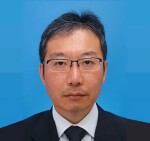
Hideharu Yonebayashi, SPE, is a distinguished engineer at Japan Oil Development Co. with over 30 years’ experience of assignments in INPEX, Japan National Oil Corporation, Bunduq Company, and ExxonMobil Development Company. He holds a PhD degree in petroleum engineering from Tohoku University and has authored or co-authored over 120 technical papers. His main interests are improved/enhanced oil recovery with related technologies such as gas-induced asphaltene risk evaluation. Yonebayashi received the Innovation and Technology Awards at the 2023 Middle East Oil, Gas, and Geosciences conference and the 2024 SPE Oman Petroleum Energy Show. He served as an SPE Distinguished Lecturer in 2021–22 and as SPE Japan Director since 2015 and is on the JPT Editorial Review Board.