Testing page for app
-
 Advances in technologies for production and facilities are being driven by the development of unconventional resources and the need for more-efficient and -reliable operations.
-
In the interest of conservation and sustainability, it is highly desirable to maximize any opportunity to reuse the produced water for subsequent fracturing treatments.
-
This paper reports the completion of a two-lateral well in the Williston basin where produced water (PW), filtered but otherwise untreated, was used throughout the slickwater and crosslinked components of approximately 60 hydraulic-fracturing stages.
-
With the innovation of extended-reach and directional drilling, running casing and liner strings has become increasingly difficult.
-
While rotary-steerable systems (RSSs) dominate the offshore directional-drilling markets, the land-based markets are still dominated by conventional directional-drilling tools. This paper presents a new RSS that is being designed and tested specifically for the onshore markets.
-
The understanding and proper application of rotary-steerable systems will continue to provide a step change in the way fields are developed. Technology developed and implemented during the boom will receive closer scrutiny and evaluation during the bust.
-
Drilling the Severnaya Truba field in Aktobe, Kazakhstan, has been costly and time consuming.
-
In this paper, after a review of the fundamentals of wettability alteration, a discussion of nanomaterials used for wettability alteration is provided.
-
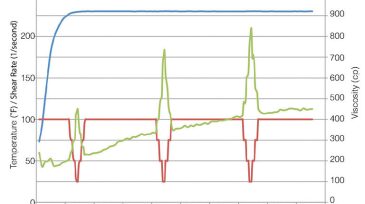
This paper details the experience of using new stabilized crosslinked-fracturing-fluid systems in the Permian Basin using borated produced water.
-
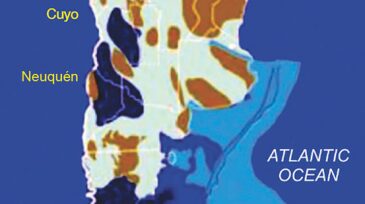
This paper discusses aspects of water logistics necessary during the well-completion phase, fracture-treatment designs applied in Vaca Muerta, and laboratory studies performed on flowback and produced water to help evaluate the potential for water reuse.