Testing page for app
-
 This is the last column I will write before the end of my tenure, and I could not think of a better subject to discuss than volunteerism in our global society.
 -
The vibration assessment of subsea systems has largely been limited to vortex-induced vibration of riser systems and unsupported pipeline spans (i.e., environmental loading) caused by flow past the outside of a riser or conductor.
-
Acquisition of accurate reservoir pressure data and high-quality formation fluid samples has proved difficult in cases of low reservoir permeability, extremely viscous crude oil, or unconsolidated formations with poor borehole conditions.
-
The discrepancy between crude and natural gas prices and estimates of increasing natural gas reserves are driving companies to study small-scale gas-to-liquids plants that can tie in multiple sources or stranded gas for a greater profit.
-
When drilling offshore wells, the most common method is to drill with a single gradient fluid with the fluid column extending from the bottom of the well back to the drilling rig.
-
Intelligent completion systems have the ability to monitor and optimize reservoir performance in real time without mechanical intervention.
-
Government, industry, and labor representatives met recently to discuss solutions to the technical skills shortage in the global oil and gas industry. Although the discussion was wide-ranging, the group came to a consensus on several key points.
-
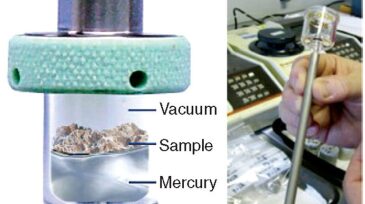
The variable data quality of core analysis, the sensitivity of results to different test methods, poor reporting standards, and the reluctance of some vendors to share experience and expertise have contributed to basic mistakes and poor data quality.
-
Robert Estes, manager of emerging technology at Baker Hughes, notes that commonly in electronic parts, the failure of semiconductors, microprocessors, memory, and dense chips at high temperature is not the silicon.
-
While there are rechargeable batteries rated to 125ºC, many service companies prefer not to use them because a rating of 150ºC is preferable. The industry typically uses one-time-use lithium primary batteries.