Testing page for app
-
 In June, the United States Federal Aviation Administration (FAA) issued the first approval for the overland use of unmanned aerial vehicles (UAVs) in Alaska.
 -
I must write my final column, before next month’s recap, on the most fundamental mission of SPE, our core purpose, our raison d’etre: the dissemination of technology.
-
The offshore industry has taken another step toward opening up new deepwater frontiers to exploration with Maersk Drilling ordering the first 20,000-psi blowout preventer (BOP) made by GE Oil and Gas.
-
The human mind, presented with a series of time data, will generally look for common features, label them as events, and seek correlations against other timelines. This approach is fallible because questionable data might be selected in attempting to find supporting evidence for a perceived pattern.
-
Every year, JPT surveys its readership to help determine future coverage and to ensure that it is fulfilling its mission.
-
Safety, efficiency, and accuracy are fundamental goals of well construction. But as the search for new oil and gas resources pushes into deeper waters and increasingly complex reservoirs, meeting these goals has become more challenging.
-
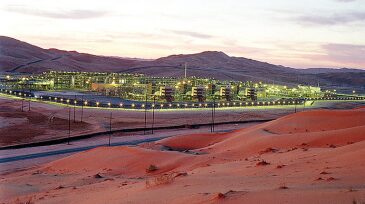
Saudi Aramco is working on slashing the production cost of tight formations to around USD 2 to USD 3 per thousand cubic feet in the next couple of years, according Adnan Kanaan, manager of the Gas Reservoir Management Department (GRMD) at Saudi Aramco.
-
Running a shale exploration and production operation requires a sharp focus on costs, but not all are measured the same.
-
Saudi Aramco’s new strategy aims to implement its intelligent field (I-Field) concept in all its upstream operations by 2016-2017, according to a source close to the company.
-
There is no doubt that North Sea activity, both its highs and lows, has been the benchmark of quality and efficiency for many decades.