Testing page for app
-
 Traditionally, sand-control equipment is used to prevent sand from entering the wellbore. An alternative is to produce solids with the well fluids and separate them at the surface.
 -
This paper presents results from a nondestructive core-strength-index tester that is less destructive than the Schmidt hammer and less intrusive, easier, faster, and less expensive than the core scratch tester.
-
Tight reservoirs are still in the early stages of becoming a dominant source of energy and economic growth throughout the world for years to come. I recently read two distinctly different articles particularly relevant to tight reservoirs.
-
A multidisciplinary approach integrates fracture characteristics, reservoir production, and stress-field evolution to design and optimize the development of unconventional assets.
-
This paper sheds light on the nonlinear physics involved in the production of shale-gas reservoirs by improving the understanding of the complex relation between gas production, reservoir properties, and several treatment-design parameters.
-
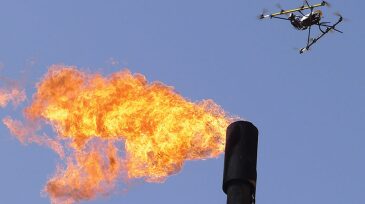
Unmanned aircraft are finding their place in the oil and gas industry by providing aerial geologic modeling to address reservoir-related challenges and making inspections safer.
-
Oil-rich but gas-short countries in the Middle East-north Africa region are exploring unconventional resources, particularly for shale and tight gas, and assessing their potential for long-term growth.
-
Digital oilfield solutions can be leveraged as a whole to provide aggregate value at the business portfolio or corporate strategy levels and to contribute to a company's intellectual capital.
-
The chief executive talks about the technologies used, challenges, and key lessons learned from the Middle East's first thermal enhanced oil-recovery project in Oman.
-
Oxane Materials' advanced cerammic proppant travels farther during fracturing in larger quantities, thereby leading to smoother, higher flows of oil and gas.