Testing page for app
-
 Apache has released its 2017 Sustainability Report. The online report features extensive disclosure of Apache’s performance in governance, environmental stewardship, workforce, health, and safety in the workplace and community outreach.
-
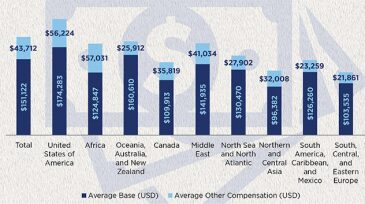
Petroleum salaries are showing increases again after 2 years of decline.
-
Well-barrier verification is having the confidence and being able to prove that “the folks on the rig will do the right thing and the equipment will function as intended when called upon to do so.” This paper describes a method of achieving that aim.
-
Researchers at the University of Calgary have developed a solid pellet that can transport bitumen and heavy oil by railcar instead of pipelines.
-
The largest Gulf of Mexico lease sale in history is designed to jump-start offshore activity.
-
Click here to test your knowledge of petroleum engineering.
-
AFGlobal acquired the Axon pressure pump technology and product line from Amkin Technologies, a privately held oilfield equipment and technology developer.
-
Norway has an ambitious plan to take carbon capture and storage offshore to a level that could potentially see the country becoming a store for other’s emissions.
-
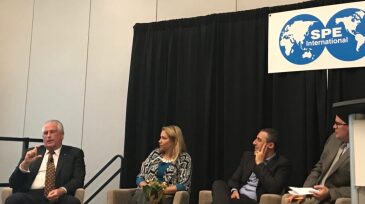
In the world of carbon capture, utilization, and storage technology, utilization is the driving factor. Three experts discussed the motivations, limitations, and challenges of CCUS at a dinner held by the Society of Petroleum Engineers CCUS Technical Section at SPE’s annual meeting.
-
The probability value, commonly known as the p-value, has been used for decades to test the significance of researchers' findings. A small p-value (typically ≤ 0.05) indicates a statistically significant result. The American Statistical Association is recommending the value be lowered to 0.005, which would reduce the number of false positives. Why is this being revisi…