Testing page for app
-
 Anadarko Petroleum said late on 30 June that it has tested more than 4,000 active oil and gas lines and plugged another 2,400 inactive ones per a state order issued after a fatal home explosion in Firestone, Colorado, in April.
-
Baker Hughes and General Electric (GE) announced the executive team that will lead Baker Hughes, a GE Company, upon closing of their proposed transaction to combine GE’s Oil and Gas business with Baker Hughes. The executive team will consist of Lorenzo Simonelli, president and CEO; Maria Claudia Borras, SPE, president and CEO, oilfield services; Belgacem Chariag, chie…
-
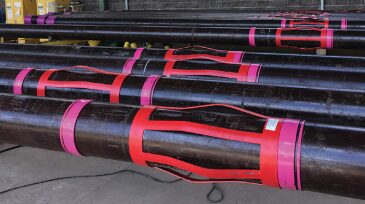
A new attachment system overcomes the limitations of traditional methods for securing tools and accessories to drilling and completion strings.
-
Several recent studies have shown that there is no evidence that hydraulic fracturing in unconventional plays harms groundwater.
-
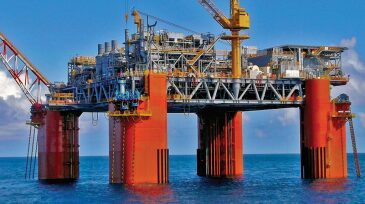
Saudi Arabia, the Permian Basin, and global deepwater areas have vastly different futures predicted. Is it time for a deepwater renaissance?
-
Global emissions of CO2 resulting from the use of fossil fuels amount to approximately 35 billion tons/yr. How much of this can we capture? How much can we store or sequester? And, perhaps the most important question: How much will it cost and who will pay?
-
This paper outlines the key issues that must be addressed from a regulatory perspective in regard to the development of an onshore unconventional-gas industry in the Northern Territory.
-
In unconventional plays, comparing the effect of different completion designs or well-management strategies on well performance remains a challenge because of the relatively brief production history and lack of long-term field analogs of these plays.
-
With multistage operations becoming the industry norm, operators need easily deployable diversion technologies that will protect previously stimulated perforations and enable addition of new ones. This paper reviews several aspects of the use of in-stage diversion.
-
In this study, several process alternatives for the permanent sequestration of carbon dioxide (CO2) as solid carbonates are evaluated.