Testing page for app
-
 This paper describes a novel method of chemical dosage based on time-resolved fluorescence (TRF) that allows a simple, accurate, and efficient quantification of chemicals below parts-per-million ranges, even for double (scale/scale, scale/corrosion) quantification.
-
In this study, samples of flowback water and downhole shales are analyzed to investigate the mechanisms controlling the chemistry of flowback water.
-
The deep-ocean Raman in-situ-spectrometer (DORISS) instruments were developed for the purposes of identifying compounds and studying in-situ chemical reactions in a nondestructive manner while working with solids, liquids, and gases.
-
At the 2016 Unconventional Resources Technology Conference, Barry Donaldson, vice president of global sales and marketing at Tetra Technologies, discussed possible cost-effective water management strategies.
-
Coalbed methane development can require a large volume of wells, but the costs of logging can be prohibitive, so alternate formation-evaluation solutions are being evaluated. This paper compares state-of-the-art mining logging technology with conventional oil-and-gas approaches.
-
Wireline continuous coring (WCC) has been adapted from the mining industry for unconventional resources. This paper is aimed at identifying and addressing complications experienced in the use of WCC.
-
Research and development firm Battelle is working on a new induced-seismicity study that aims to help wastewater disposal well operators in Ohio stay on the good side of state regulators.
-
Shell has reaffirmed its commitment to the shale business and views it as a growth opportunity moving into the 2020s
-
SPE welcomes 97 members into the Legion of Honor, which observes 50 years of consecutive membership in the Society.
-
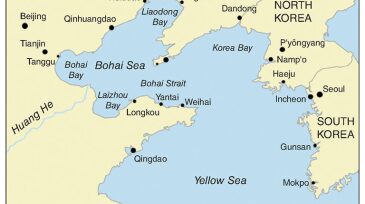
A new multilayer boundary‑detection service has been introduced to resolve the geological uncertainty associated with horizontal wells in Bohai Bay. Geosteering and real time reservoir characterization were used to reduce the uncertainty.