Testing page for app
-
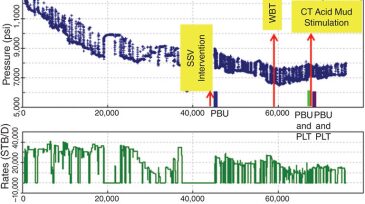
 A case study in the deepwater Gulf of Mexico in which pressure transient analysis, fractional flow, and production logging tools were integrated to identify correctly the cause of, and execute an effective remedy for, a well’s productivity deterioration.
-
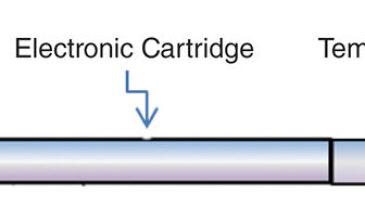
The objective of this study was to look at factors that can affect a temperature log and steps that can be taken to improve temperature-measurement accuracy.
-
Operators around the world are focusing on lowering their production costs for both conventional and unconventional assets, while oilfield service companies are responding to customers’ cost-saving requests with incremental improvements in technology, supply chains, automation, and collaboration.
-
Field developers are making bold step-changes to form their optimization strategies on the crests of digital transformation, using massive data analytics, machine learning, cloud computing, and data-sharing strategies for oil and gas fields in all stages of development. This trend will only grow.
-
This paper presents a data set involving the pumping of multiple, unique chemical tracers into a single Wolfcamp B fracture stage.
-
What is the definition of offshore-facilities project success in the context of Industry 4.0? Generally, cost, time, and scope are the common project-success indicators. However, I believe we can expand these indicators to the social and environmental areas.
-
The growing popularity of model-based optimization work flows has resulted in an increase in their application to field cases.
-
The complete paper discusses a study in which the authors propose a joint field-development and well-control-optimization work flow using high-performance parallel simulation and commercial cloud computing.
-
The complete paper describes a physics-based model of interference and a sensitivity study to propose guidelines for well spacing and a drilling timeline for multiple horizontal wells in the Vaca Muerta shale.
-
One of the more technologically challenging production-chemistry applications in deep water is the control of gas hydrates. Deepwater subsea flowlines offer an almost perfect hydrate-formation environment, and control measures must be taken.