Testing page for app
-
 Blockchain technology may have gotten its start by keeping cryptocurrency traders honest, but its usefulness is expanding. And the oil and gas industry is taking advantage.
 -
A 3-year study that demonstrated how to capture a worker’s safety performance and translate the data into personal fatigue levels is the first step in creating a framework that can identify research-supported interventions that protect workers from injuries caused by being tired on the job.
-
Companies waste countless resources measuring the wrong things, not measuring at all, or failing to keep "the most important thing, the most important thing."
-
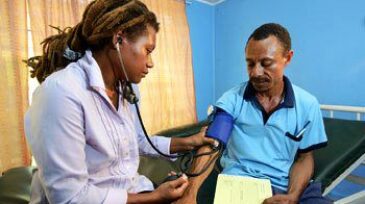
As part of the Papua New Guinea Liquefied Natural Gas project, a systematic longitudinal effort was made to collect a broad range of morbidity and mortality data for those communities directly adjacent to the project. These data were used to inform workplace disease-monitoring efforts.
-
Many leaders of petroleum engineering schools from around the world have never met but SPE’s technical director for academia would like to change that.
-
Charles Oliver (Doc) Stokley, longstanding SPE member and innovator in the field of oil and gas packer technologies, died 3 December. His design achievements in oil and gas packers left a lasting impact on the industry and improved the safety of well completion operations. Stokley began his career at Schlumberger as a field logging engineer in Texas. He later worked a…
-
To test your knowledge, answer these 10 questions from Jim Crompton, who teaches petroleum data analytics at the Colorado School of Mines.
-
Digital solutions that have made their mark in other industries may foster stronger collaborative environments in various sectors within energy, including equipment maintenance and data management.
-
A new geostatistics modeling methodology that connects geostatistics and machine-learning methodologies, uses nonlinear topological mapping to reduce the original high-dimensional data space, and uses unsupervised-learning algorithms to bypass problems with supervised-learning algorithms.
-
Artificial intelligence has come to the oil patch, accelerating a technical change that is transforming the conditions for the oil and gas industry’s 150,000 US workers.