Testing page for app
-
 This work experimentally investigates the behavior of an intermittent multiphase liquid/gas flow that takes place upstream of an electrical submersible pump (ESP).
-
Computational advances in reservoir simulation have made possible the simulation of thousands of reservoir cases in a practical time frame. This enables exhaustive exploration of subsurface uncertainty and development/depletion options.
-
With the current changes in the industry, are we seeing the demise of unconventional developments? No, clearly not. The unconventional industry is adapting to deliver the energy demands of the future despite the low oil price.
-
This paper describes how seismic reservoir integration, advanced production analysis, and accurate nanoscale and 3D full-field simulations may address profitability issues and help oil companies to be more efficient in developing unconventional portfolios.
-
This paper describes a methodology for classification of artificial-lift-system (ALS) failures and addition of a commonly used root-cause failure classification.
-
When evaluating artificial-lift requirements, sometimes data present uncertainties at the initial planning stage. This paper presents the integrated and structured methodology that was used to deal with high-uncertainty conditions.
-
This paper presents results from the analysis of the effect of in-fill drilling on parent-well performance, and describes a simplistic approach to understanding the effect of the quest for operational efficiencies and economic cycles on development strategies.
-
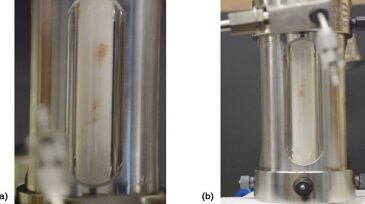
Carbon dioxide (CO2)/water foams are of interest for mobility control in CO2 enhanced oil recovery (EOR) and as energized fracture fluids or as hybrid processes that combine aspects of both processes.
-
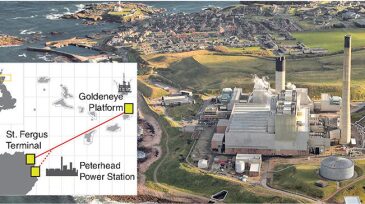
A major oil company is progressing a portfolio of commercial-scale carbon-capture-and-storage (CCS) demonstration projects covering an array of technologies that target applications of relevance to the wider oil and gas industry.
-
There remain a number of challenges with CO2 EOR. These include gravity override, poor sweep efficiency, and economic factors.