Testing page for app
-
 Earlier this year, SPE published the technical report “Getting to Zero and Beyond: The Path Forward,” representing the work of hundreds of oil and gas professionals and their thoughts on how we can achieve an injury- and incident-free workplace. The first paper summarizes the report’s findings.
-
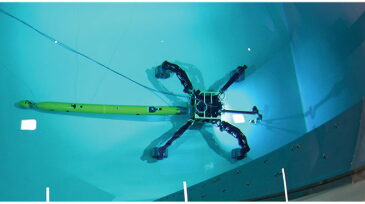
Technologies are being developed that have the potential to support marine mining in all stages from prospection to decommissioning. These developments will likely have substantial influence in the oil and gas industry, itself searching for ways to maximize exploitation of assets.
-
As the hunger for data grows, long stepouts become more common, and fiber communication becomes standard, the use of fiber in subsea oil and gas fields is set to increase.
-
This paper presents a scientific method for reducing fatigue risks in oil and gas organizations that operate a slowly rotating shift schedule.
-
Relationships and engagement with communities in direct areas of influence is of paramount importance for successful exploration and production (E&P) operations.
-
This paper presents an analysis of the environmental aspects of the exploitation of unconventional reservoirs in order to evaluate the risk of the activity.
-
This paper emphasizes the value gained by investing in cybersecurity for drilling, workover, and completion operations.
-
This paper examines the use of injury rates as a key performance indicator (KPI). It argues that, as a KPI, injury-frequency rate is no longer a valid measure.</p>
-
Harnessing stranded data will transform operations beyond what existing, siloed software solutions delivered. There is a clear need to be more agile and embrace cloud-based solutions to realize new capabilities.
-
Seismic stimulation, achievable with the implementation of a single tool, requires significantly lower investments than gas, thermal, and chemical injection methods, with minimal environmental impact.