

Latest News
-
 While the current oil prices may not generate the cash flow needed to pay for offshore projects using traditional financial options, private equity may be the best alternative for operators.
 -
Secretary of the Interior Ryan Zinke praised America’s resource potential and regulatory framework at OTC. He also laid out his plan to review the department and signed two secretarial orders.
-
The quick turnaround times and low-risk nature of shale developments need to be replicated in the deepwater business, according to the CEO of Murphy Oil.
-
Development of a new polymer composite that degrades via hydrolysis in hot water or brine holds potential for use in structural applications for intervention-less downhole tools.
-
A cybersecurity director outlines the steps needed to adopt a risk-based cybersecurity program. He cautions that in many cases, process control systems’ confidentiality is mistakenly viewed as a lower priority than IT systems’.
-
Brazil is embarking on a 3-year round of bid sales offering international oil companies multibillion barrel prospects with better contract terms.
-
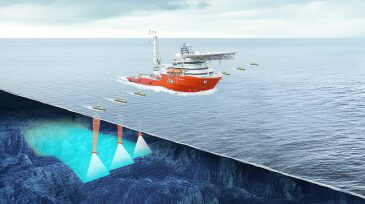
AUVs aren’t limited to inspections and pipeline surveys. Deployment of a flotilla of AUVs to work on a project, and the communication among them, may someday lead to a subsea Internet of Things.
-
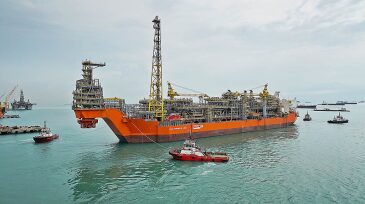
Innovations characterize the deepwater Moho Nord field development, recently brought on stream by Total in the Republic of Congo, and the project creates significant value for the country.
-
A panel of executives, project managers, and government regulators involved with the Mad Dog project in the US Gulf of Mexico discuss the importance of collaboration and strategic alignment in project development.
-
OriginClear agreed to a sales licensing deal for use of its Electro Water Separation technology at a Sinopec-operated shale gas site.
-
Canada will become the world’s fifth-largest producer of crude oil in 2017. The solvent-assisted-SAGD poses the largest advancement in production techniques in the oil sands, and if scaled up, could further reduce extraction costs.
-
Chinese scientists have proposed the world's first underwater magnetic levitation train, theoretically capable of 2000 km/hr, in Zhoushan, Zhejiang province. The 10-km long vacuum tunnel would float in water, which would bear 90% of its weight. China Railway Tunnel Survey and Design Institute, a subsidiary of China Railway Group, is reported to have completed prelimin…








Explore Content by Discipline
Trending Content




Get JPT articles in your LinkedIn feed and stay current with oil and gas news and technology.