carbon capture and storage
-
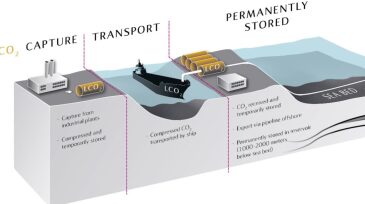
 Norway has an ambitious plan to take carbon capture and storage offshore to a level that could potentially see the country becoming a store for other’s emissions.
 -
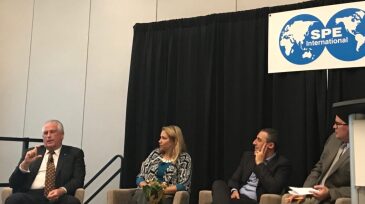
In the world of carbon capture, utilization, and storage technology, utilization is the driving factor. Three experts discussed the motivations, limitations, and challenges of CCUS at a dinner held by the Society of Petroleum Engineers CCUS Technical Section at SPE’s annual meeting.
-
Gassnova has assigned Statoil to evaluate the development of carbon storage on the Norwegian continental shelf. This will be the first storage site in the world receiving carbon dioxide from several industrial sources.
-
In this study, several process alternatives for the permanent sequestration of carbon dioxide (CO2) as solid carbonates are evaluated.
-
An operator has designed a demonstration project for carbon dioxide (CO2) enhanced oil recovery (EOR) and has implemented it in one of its fields.
-
Global emissions of CO2 resulting from the use of fossil fuels amount to approximately 35 billion tons/yr. How much of this can we capture? How much can we store or sequester? And, perhaps the most important question: How much will it cost and who will pay?
-
The Southwest Partnership on Carbon Sequestration (SWP) is one of seven large-scale demonstration projects sponsored by the US Department of Energy.
-
Last year, SPE created a task force to study the topic of climate change and to determine if a public position statement should be created. After a year-long review, it recommended that we not develop a statement on climate change, which was accepted by the SPE Board of Directors in March.
-
A new material under development is highly effective at sieving carbon dioxide from natural gas streams and is also cheap and easy to make, according to researchers.
-
The deal will transfer nearly 2 billion bbl of reserves to Canadian Natural Resources while bolstering Shell's downstream and carbon-capture role in support of oil sand development.