

flaring
-
 While Uzbekistan has seen a significant drop in flaring, methane leaks from deteriorating infrastructure continue to reveal themselves to satellites in space.
 -
This paper introduces a field-deployable, trailer-mounted liquefaction system engineered to convert flared or stranded gas into low-carbon liquefied natural gas.
-
The Oil and Gas Climate Initiative (OGCI) and nonprofit Carbon Mapper announced they are teaming up to launch a new collaboration aimed at accelerating practical and measurable reductions in methane emissions from the oil and gas industry.
-
The integrated field management services contract signals an evolution of KBR’s role at Majnoon from one of stabilizing production to a more complex and sophisticated role that takes responsibility for integrating full upstream operations.
-
The tools to reduce flaring are well within reach, but the results will depend on a long-term commitment by operators and governments.
-
The planned facility was designed to process 34 MMcf/D of associated gas into fully refined gasoline.
-
Monitoring on the ground is helping the industry shift from best estimates to hard data so it can bring the true emissions profile into focus.
-
This paper details a data-driven methodology applied in Indonesia to enhance flare-emission visibility and enable targeted reduction strategies by integrating real-time process data with engineering models.
-
EERC CEO Charles Gorecki outlines how applied research in North Dakota is helping improve oil recovery, reduce emissions, and advance carbon storage.
-
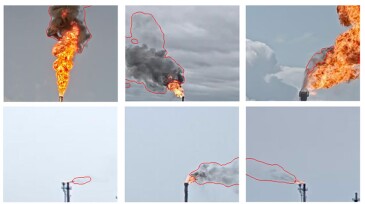
This paper focuses on developing a model that can be used in an automated, end-to-end flare-smoke detection, alert, and distribution-control solution that leverages existing flare closed-circuit television cameras at manufacturing facilities.




Page 1 of 10