flaring
-
 Data from member companies reveals an increased intensity in greenhouse-gas emissions for 2021. And, while flaring increased, too, long-term trends on that practice are clearly moving downward.
-
An emissions-reduction study conducted for a Middle East operator identified potential annual savings of $10 million–$15 million, a 20% decrease in total Scope 1 CO2eq emissions, and 10 MW of energy reduction and delivered more than 100 recommendations for both technical and internal framework improvements.
-
SponsoredImprove modeling accuracy and reduce the risk of unplanned downtime. Complete more accurate comprehensive pressure safety studies faster by eliminating the need for multiple applications.
-
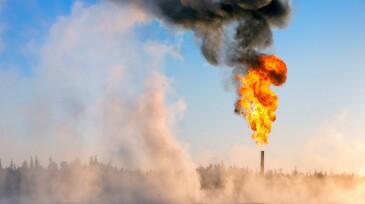
Gas flaring, which accounts for 30% of carbon emissions from fossil-fuel operations, dropped globally to a 10-year low in 2021, but questions remain whether 2022 will see a rebound as the industry reboots in a post-COVID-19 world with oil and gas supplies tightening.
-
The authors describe a process study to identify the potential causes of flaring during LNG offtake and corrective measures to accomplish zero flaring without capital plant modification.
-
This paper presents the development and test of a method to predict upstream events that could lead to flaring, applying an integrated framework using machine-learning and big-data analytics.
-
A study in North Dakota found that respiratory illness increased as far as 60 miles away from flaring of natural gas.
-
Oil producers encountering pockets of methane typically use flare stacks to burn off the vented gas. However, winds blowing across conventional open flame burners often result in 40% or more of the methane escaping into the air.
-
UK offshore oil and gas producers are moving closer to the region's goal of achieving zero routine flaring by 2030.
-
A recent study led by environmental engineers at Rice University quantifies the effect of black carbon particles on health.