AI/machine learning

As digital technologies become commonplace, industry leaders say core engineering knowledge remains essential for making informed decisions and avoiding costly mistakes.

The deals, with a potential value exceeding $3.7 billion, are aimed at strengthening Saudi Aramco’s supply chains and expanding its use of industrial artificial intelligence.

This work applies fuzzy logic, a well-established artificial-intelligence technique, to quantitatively assess connectivity between injectors and producers in a giant presalt field in the Santos Basin of Brazil.
-
 Adaptability, collaboration, and digital technologies are all pages in Aramco’s oilfield R&D playbook.
 -
Industry experts dissected the challenges in deploying artificial intelligence across the energy sector during a special session at SPE’s Annual Technical Conference and Exhibition.
-
AI is transforming the field of cybersecurity, offering new possibilities and challenges for both defenders and attackers, but AI also can introduce new vulnerabilities and risks and raise new ethical, legal, and social issues for cybersecurity.
-
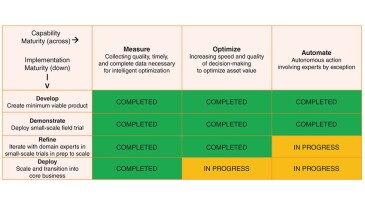
This paper presents a case study highlighting the demonstration, refinement, and implementation of a machine-learning algorithm to optimize multiple electrical-submersible-pump wells in the Permian Basin.
-
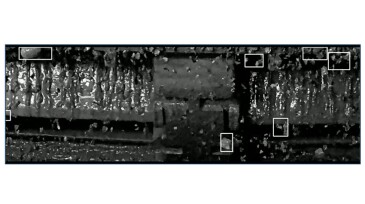
This paper describes an experimentation trial deploying and operating a computer-vision system on a deepwater rig to measure drilled cuttings in real time using a remotely monitored camera system.
-
This paper presents a closed-loop iterative well-by-well gas lift optimization workflow deployed to more than 1,300 operator wells in the Permian Basin.
-
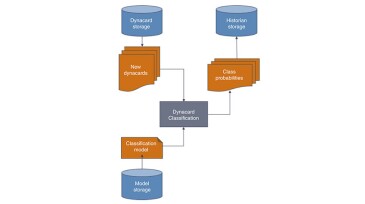
This paper explores the use of machine learning in predicting pump statuses, offering probabilistic assessments for each dynacard, automating real-time analysis, and facilitating early detection of pump damage.
-
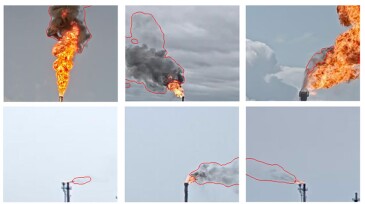
This paper focuses on developing a model that can be used in an automated, end-to-end flare-smoke detection, alert, and distribution-control solution that leverages existing flare closed-circuit television cameras at manufacturing facilities.
-
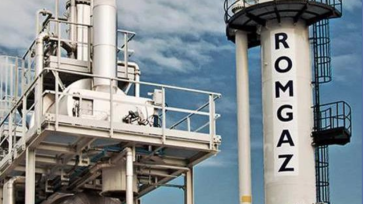
Real-time wellhead monitoring aims to help Romania meet new EU methane emission regulations.
-
The supermajor’s Energy Outlook 2025 suggests geopolitical fragmentation could tilt the balance of the energy trilemma toward energy security and away from sustainability.