AI/machine learning

This research focuses on combining physics-based expert rules with machine learning to improve the detection of failure-related events in electrical submersible pumps.

A combination of physics principles and machine-learning techniques is used in this work to develop a virtual flowmeter for oil-production optimization in electrical-submersible-pump-lifted oil wells, resulting in reliable generalization.

This paper presents the deployment of an artificial intelligence-enabled autonomous gas lift optimization system, integrating real-time centralized advanced process control with cloud-based analytics to enhance artificial gas lift performance in producer wells.
-
 Reaching further than dashboards and data lakes, the agentic oil field envisions artificial intelligence systems that reason, act, and optimize.
 -
In the past year, publications on CO2, natural gas, and hydrogen storage have increasingly focused on the design, evaluation, and optimization of storage plans. These efforts encompass a broad spectrum of challenges and innovations, including the expansion of storage reservoirs from depleted gas fields and saline aquifers to stratified carbonate formations and heavy-o…
-
Major increases in hydrocarbon production require both incremental and revolutionary technologies, industry leaders said during the SPE Hydraulic Fracturing Technology Conference.
-
This paper presents a multifaceted approach leveraging precise rig control, physics models, and machine-learning techniques to deliver consistently high performance in a scalable manner for sliding.
-
This guest editorial explores the rise of agentic AI and its potential effect on oil and gas professionals.
-
This paper presents an automated workflow deployed for scheduling and validating steady-state production-well tests across more than 2,300 wells in the Permian Basin.
-
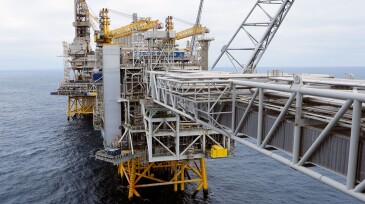
The Norwegian major said it is using artificial intelligence for predictive maintenance throughout its facilities and for interpretation of seismic data from the Norwegian continental shelf.
-
This paper explores the evolving role of the digital petroleum engineer, examines the core technologies they use, assesses the challenges they face, and projects future industry trends.
-
This work presents the development of fast predictive models and optimization methodologies to evaluate the potential of carbon-dioxide EOR and storage operations quickly in mature oil fields.
-
This paper presents a novel application of artificial intelligence in computer vision for automating blowout-preventer pressure-chart-data extraction, demonstrating significant efficiency gains and a high return on investment.