Business/economics

Lower operating expenditures and a changing asset mix helped UKCS operators cut average production costs by 9% year over year, despite relatively flat production levels, according to the NSTA.

The deal adds 40,000 B/D of production and epands Cenovus’ SAGD footprint with three Alberta assets.

The Federal Reserve Bank of Dallas’ third-quarter energy survey reflects industry views on the drawdown of the US Strategic Petroleum Reserve, the outlook for Persian Gulf crude exports, and expectations for oil prices.
-
 The company plans to split when the markets recover.
 -
More than 200 companies could become insolvent in the UK and Norway. This number may be larger when including the rest of Europe.
-
In its first response to the Russia-Saudi Arabia price war, the US government will purchase up to 78 million bbl of crude to protect domestic producers.
-
Because offshore project lead times are longer than in shale, production is likely to come on line in 2–5 years when oil prices may be higher. But the number of FPSOs to be sanctioned this year may be cut by half.
-
The shale industry could shoulder 65% of $100-billion 2020 global E&P spending cut. Can oilfield services providers afford to cut their fees further to prop up hard-hit operators?
-
The prescribed treatment for market- and virus-induced oil price collapse is to quickly slow production growth. Two US shale companies moved swiftly to cut the pace of drilling and completions, but it is too soon to know if that will have any impact.
-
The company announced both contract awards simultaneously. The new contract awards could be worth up to $800 million.
-
Led by Texas and New Mexico, year-over-year crude output jumped by 11% according to the US Energy Information Administration. Going forward, new records will be set but at a slower pace.
-
Because the greenfield can use existing infrastructure, the Norwegian operator says it will count as a low-carbon development.
-
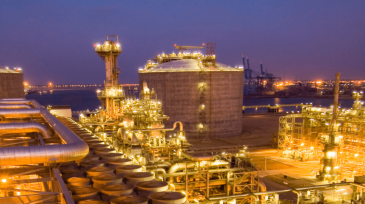
The Damietta LNG plant is expected online by June 2020. The plant will be owned by ENI, EGAS and EGPC.