Business/economics

The long-term outlook analysis says a potential shift toward new construction could push 2026 production 3% above 2025 levels.

Lower operating expenditures and a changing asset mix helped UKCS operators cut average production costs by 9% year over year, despite relatively flat production levels, according to the NSTA.

The deal adds 40,000 B/D of production and epands Cenovus’ SAGD footprint with three Alberta assets.
-
 The country’s largest producer of oil and gas is leading the charge to create a domestic shale boom.
 -
The biggest merger in the oil and gas industry in 3 years has become official, making Oxy the largest holder of land in both the Permian Basin and DJ Basin.
-
The private investment firm said it will partner with Treeline Well Services, one of the largest private rig providers in Canada, to build its service fleet following acquisition of the company. Treeline’s core areas are in Alberta and British Columbia.
-
A ring of at least five people targeted syntactic foam, a key material for deepwater oil drillers that also has military and commercial uses.
-
In a filing with the US FERC, Plains All American Pipeline said it would begin charging shippers an additional fee on its Cactus II pipeline to offset higher construction costs incurred in the wake of US steel tariffs.
-
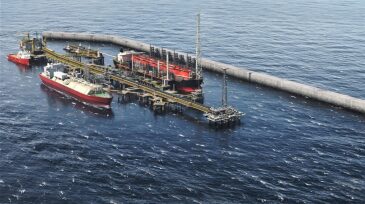
The E&P company said that a reduction in its interests for projects off the coast of the West African nations should still happen by the end of this year. This includes the large Greater Tortue Ahmeyim LNG project, which is set to start up in 2022.
-
Despite reports to the contrary, Permian well productivity remains healthy, with average new production per well in the basin matching all-time highs, Rystad says. And the majors are now a main catalyst.
-
The subsea tieback is expected to start up in 2021. This is Shell’s second major development on a tieback in the US Gulf of Mexico, following Kaikias’ startup in May.
-
The strategy supports the Maximise Economic Recovery from UK Oil & Gas Strategy and Vision 2035, whose goal is to achieve £140 billion additional gross revenue from UKCS production by that time.
-
Five years since the start of the precipitous oil price drop that led to the industry’s worst recession since the 1980s, the oil market is still struggling with supply/demand balances and price stability.