Business/economics

The long-term outlook analysis says a potential shift toward new construction could push 2026 production 3% above 2025 levels.

Lower operating expenditures and a changing asset mix helped UKCS operators cut average production costs by 9% year over year, despite relatively flat production levels, according to the NSTA.

The deal adds 40,000 B/D of production and expands Cenovus’ SAGD footprint with three Alberta assets.
-
 The deal would raise nearly $4 billion for GE, which plans to reduce its stake in the oilfield services company from 62.5% to at least 50.1% after the transactions. It had previously announced in June its intention to sell its stake over a 2- to 3-year period.
 -
The Abu Dhabi government approved a $132.3-billion capital expenditure increase that will fund, among other things, a plan that could enable the country to sustain LNG production through 2040.
-
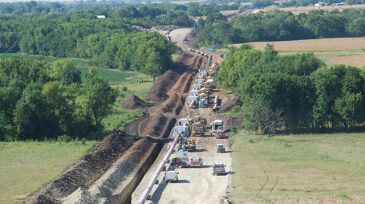
A decision by the US District Court in Montana deals a blow to the TransCanada project, which is designed to transport heavy crude from Alberta to Nebraska.
-
The deal gives Equinor exploration parcels in the prolific Jeanne d’Arc Basin, near its existing discoveries offshore Newfoundland and Labrador.
-
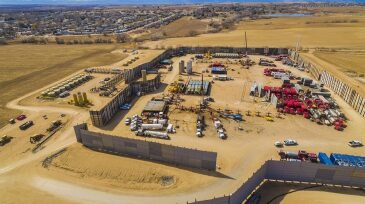
Colorado voters soundly defeated a measure 6 November that would have restricted the vast majority of new development in the country’s fifth largest oil-producing state. The outcome was a big relief for the oil and gas industry, but its existential fight in the state hasn’t ended.
-
With big shale mergers dominating the headlines, some of the industry’s most influential financial players gathered to discuss what’s driving the shift in operational and fiscal priorities.
-
The SPE Liquids-Rich Basin Conference in Midland, Texas, merged topics that have dominated recent industry discussions: technologies centered on big data, interwell communication, and Permian Basin production.
-
Petroleum industry professionals’ reported average compensation in 2018 shows an increase from this past year but is still lower than salaries before the oil price downturn that began in 2014.
-
The rebrand follows the completion of BP’s $10.5-billion purchase of BHP’s assets in the Permian, Eagle Ford, and Haynesville.
-
Steady-state modeling of an asset requires the work of multiple engineering teams, which often leads to suboptimal facility design. An integrated model using information consistently across the entire asset may alleviate the pain resulting from conventional methods.