Business/economics

The long-term outlook analysis says a potential shift toward new construction could push 2026 production 3% above 2025 levels.

Lower operating expenditures and a changing asset mix helped UKCS operators cut average production costs by 9% year over year, despite relatively flat production levels, according to the NSTA.

The deal adds 40,000 B/D of production and expands Cenovus’ SAGD footprint with three Alberta assets.
-
 The technical directors’ special session at SPE’s Annual Technical Conference and Exhibition presented challenges on the E&P frontier in an industry grinding through a period of deep cost reductions.
 -
Top industry professionals will be honored this week for their significant contributions to the oil and gas industry.
-
Angola’s powerful oil and gas industry has enabled the country’s rapid growth, but an overreliance on those revenues has posed major challenges. Does a recent change of leadership mean a shift in the nation’s economic direction?
-
Despite optimism in a shift from “lower for longer” oil prices, industry executives stressed the value of maintaining efficient operating practices.
-
On 9–11 October, the Society of Petroleum Engineers (SPE) will again assemble exploration and production (E&P) professionals from around the world for the 2017 Annual Technical Conference and Exhibition (ATCE) at the Henry B. Gonzalez Convention Center in San Antonio, Texas, USA.
-
Many of the biggest players in the industry—particularly the majors—have adapted their portfolios for “lower for longer” and are once again sanctioning big projects. While we are not back to the heady days of 2010–2014, we have left behind the dark days of 2015–2016.
-
SPE’s annual meeting will feature leading executives from Baker Hughes and Devon as well as other industry leaders.
-
The world still needs oil and gas, but it is also making room for renewable energy which will change how upstream companies do business.
-
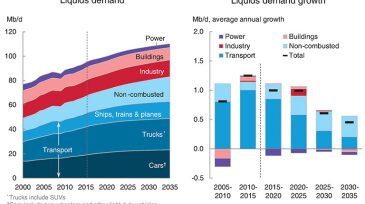
Oil demand growth from the transportation sector, the linchpin of oil consumption, will slow to a trickle by 2035 and level off, while demand from the petrochemicals sector will become oil’s chief growth driver, the BP 2017 Energy Outlook says.
-
The composite upstream economic index for Texas increased for the eighth consecutive month due to a number of factors, including increased rig count, drilling permits, and upstream employment figures.