Business/economics

Schneider Electric says the deal advances its vision of creating intelligent industrial ecosystems that connect physical assets with digital insights across the asset life cycle.

The firm’s latest analysis puts the bulk of the blame on a fragmented supply chain.

The supermajor said the fields are not expected to contribute meaningfully to its production profile by 2030.
-
 Revised estimates of project sanctioning total $61 billion in 2020, which is down from $192 billion forecast in 2019.
 -
The notion that the state of Texas could help oil producers by limiting production at a time when the market is glutted has a real history in Texas, but an iffy future.
-
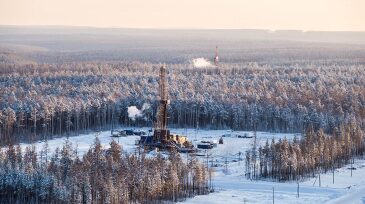
US shale operators are cutting deeper, with some eliminating drilling and completions activity altogether.
-
Oil and gas operators played it safe in the latest offshore auction by placing about half the high bids typically made. As a result, the total dollar commitment for the round was the lowest since 2017.
-
The world’s second-largest service firm has seen its share price tumble by 75% as a result of the COVID-19 pandemic and a brutal price war. Workers at Halliburton’s main campus are among the first to feel the impacts.
-
More than 200 companies could become insolvent in the UK and Norway. This number may be larger when including the rest of Europe.
-
Oil prices got bad fast, so when will they get better? Don’t bet on a quick recovery.
-
The company plans to split when the markets recover.
-
In its first response to the Russia-Saudi Arabia price war, the US government will purchase up to 78 million bbl of crude to protect domestic producers.
-
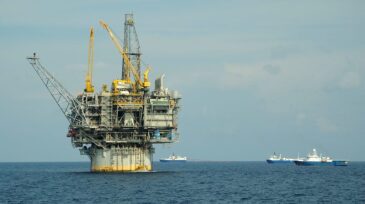
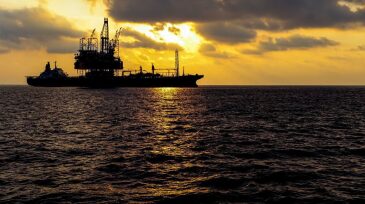
Because offshore project lead times are longer than in shale, production is likely to come on line in 2–5 years when oil prices may be higher. But the number of FPSOs to be sanctioned this year may be cut by half.