Business/economics

After years of market shocks, technological breakthroughs, and rising uncertainty, ATCE 2026 will provide new insights on how industry leaders and technical experts are preparing for the next era of the upstream business.

This guest editorial examines why geothermal projects require a different planning, financing, and development approach than traditional oil and gas projects.

As the pace of new discoveries slows and high-quality prospects become harder to find, oil companies may need to rely more heavily on mature fields to maintain production and support future supply.
-
 The US crude inventory grew by 74 million bbl since 13 March when the US declared a national emergency in response to COVID-19.
 -
Rystad Energy estimates show demand will be at its lowest in April before moving back up again in May.
-
Tubular steelmaker Vallourec is latest to join reductions in workforce.
-
On 20 April, a historic drop of oil prices occurred. WTI futures contract dove into negative territory for the first time ever.
-
The chapter 11 filing comes as record-low crude prices and excess supply have impacted operations across the industry. About 2,500 jobs could be at stake.
-
While many shale producers are racing to cut costs by removing crews from the field, ExxonMobil and Chevron stood out as maintaining large numbers of fracturing crews.
-
The nuances of futures contracts caught many of the world’s traders off guard, sending major US crude benchmark into negative pricing territory for the first time. But it probably will not be the last time.
-
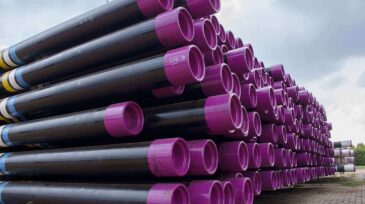
What are the impacts of the energy crunch on OCTG demand?
-
Texas Railroad commissioners recognize the battering Texas oil companies, and their workers, are taking, but will continue considering their options until 5 May.
-
The savings result in part from the depreciation of global currencies against the US dollar, as most operating expenses in oil and gas production are realized in local currencies. Brazil leads in savings.