Business/economics

After years of market shocks, technological breakthroughs, and rising uncertainty, ATCE 2026 will provide new insights on how industry leaders and technical experts are preparing for the next era of the upstream business.

This guest editorial examines why geothermal projects require a different planning, financing, and development approach than traditional oil and gas projects.

As the pace of new discoveries slows and high-quality prospects become harder to find, oil companies may need to rely more heavily on mature fields to maintain production and support future supply.
-
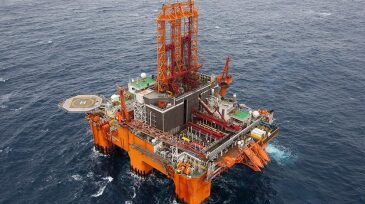
 Because offshore project lead times are longer than in shale, production is likely to come on line in 2–5 years when oil prices may be higher. But the number of FPSOs to be sanctioned this year may be cut by half.
 -
The shale industry could shoulder 65% of $100-billion 2020 global E&P spending cut. Can oilfield services providers afford to cut their fees further to prop up hard-hit operators?
-
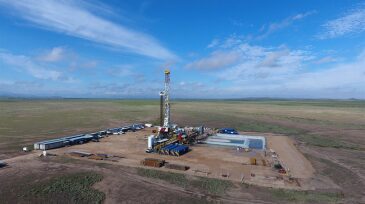
The prescribed treatment for market- and virus-induced oil price collapse is to quickly slow production growth. Two US shale companies moved swiftly to cut the pace of drilling and completions, but it is too soon to know if that will have any impact.
-
The company announced both contract awards simultaneously. The new contract awards could be worth up to $800 million.
-
Led by Texas and New Mexico, year-over-year crude output jumped by 11% according to the US Energy Information Administration. Going forward, new records will be set but at a slower pace.
-
Because the greenfield can use existing infrastructure, the Norwegian operator says it will count as a low-carbon development.
-
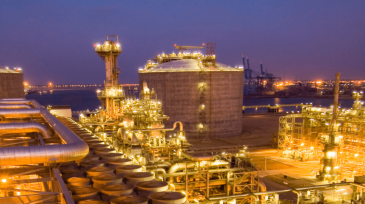
The Damietta LNG plant is expected online by June 2020. The plant will be owned by ENI, EGAS and EGPC.
-
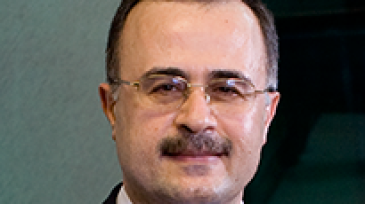
The first interdisciplinary oil and gas conference to be held in Saudi Arabia, the 12th International Petroleum Technology Conference, was the largest in its history in attendance. This features highlights of the panel and technical sessions, and an interview with Saudi Aramco CEO Amin Nasser.
-
JPT interviewed Saudi Aramco President and Chief Executive Officer Amin Nasser during IPTC. He discussed the company’s outlook for the new year and the current state of the oil and gas industry.
-
In a scenario of accelerated international infection rates, the supply impact would quickly become more severe. If ongoing virus containment efforts prove unsuccessful, production operations at more producing assets in Southeast Asia and beyond could be directly affected.