Business/economics

After years of market shocks, technological breakthroughs, and rising uncertainty, ATCE 2026 will provide new insights on how industry leaders and technical experts are preparing for the next era of the upstream business.

This guest editorial examines why geothermal projects require a different planning, financing, and development approach than traditional oil and gas projects.

As the pace of new discoveries slows and high-quality prospects become harder to find, oil companies may need to rely more heavily on mature fields to maintain production and support future supply.
-
 With international spot trade of gas increasing and public pressure growing for cleaner fuels, the world's major gas producers believe the time is finally right to become a major force in global energy markets.
 -
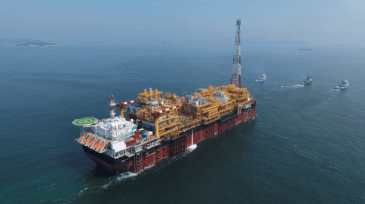
The depth of the world’s offshore projects has steadily increased over the past 30 years—and so has its production base. The growth trend will continue thanks to new fields offshore Brazil, Guyana, and the US.
-
The most read stories reflect interest in the digital transformation, the energy transition, and shale operations.
-
Reduced investment in US shale will continue to weigh down the global oilfield services market through 2020.
-
Devon exits the asset that served as the company’s cornerstone for almost two decades and is known to the world as the birthplace of the shale revolution.
-
Directional drilling and measurement-while-drilling technology has become so democratized in the Texas shale sector that no provider holds more than 8% of the market share.
-
Total has agreed to acquire interests in two blocks in the offshore Kwanza Basin from Angola’s state-owned Sonangol and has received an extension on its offshore Block 17 production licenses.
-
BP has signed a deal with a joint venture between Petrofac and SOCAR, the Azeri state oil company, to support its osshore and onshore operations in the Caspian Sea. These include the offshore Azeri-Chirag-Gunashli and Shah Deniz fields, along with the associated Baku-Tbilisi-Ceyhan pipeline, the South Caucasus pipeline, and the Western Route export pipeline.
-
The latest move to consolidate the US shale sector will add 1,500 drilling locations to the buyer's portfolio. It also reflects that all-stock or mostly-stock deals are now the sector’s preferred acquisition vehicle.
-
The company said it will avoid the pumping business's “structurally disadvantaged position” and instead focus on well servicing and water logistics.