Business/economics

After years of market shocks, technological breakthroughs, and rising uncertainty, ATCE 2026 will provide new insights on how industry leaders and technical experts are preparing for the next era of the upstream business.

This guest editorial examines why geothermal projects require a different planning, financing, and development approach than traditional oil and gas projects.

As the pace of new discoveries slows and high-quality prospects become harder to find, oil companies may need to rely more heavily on mature fields to maintain production and support future supply.
-
 In a filing with the US FERC, Plains All American Pipeline said it would begin charging shippers an additional fee on its Cactus II pipeline to offset higher construction costs incurred in the wake of US steel tariffs.
 -
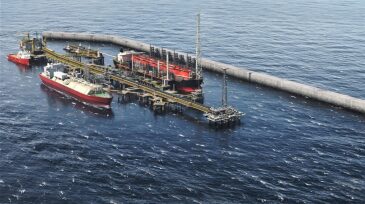
The E&P company said that a reduction in its interests for projects off the coast of the West African nations should still happen by the end of this year. This includes the large Greater Tortue Ahmeyim LNG project, which is set to start up in 2022.
-
Despite reports to the contrary, Permian well productivity remains healthy, with average new production per well in the basin matching all-time highs, Rystad says. And the majors are now a main catalyst.
-
The subsea tieback is expected to start up in 2021. This is Shell’s second major development on a tieback in the US Gulf of Mexico, following Kaikias’ startup in May.
-
The strategy supports the Maximise Economic Recovery from UK Oil & Gas Strategy and Vision 2035, whose goal is to achieve £140 billion additional gross revenue from UKCS production by that time.
-
Five years since the start of the precipitous oil price drop that led to the industry’s worst recession since the 1980s, the oil market is still struggling with supply/demand balances and price stability.
-
The Bakken and Niobrara operator will eliminate 254 jobs in an effort “to better align [its] business with the current operating environment.”
-
A comeback in offshore and international exploration and production is making up for the North American slowdown, but it is a difficult transition.
-
Leaders from two large US onshore rig contractors said their expectations that the rig-count slide would hit a second-quarter bottom were off and are now refraining from making new predictions as to when it will end.
-
UK operator Trident Energy is entering Brazil while Australian firm Karoon Energy is expanding its position in the country. Both will try to boost output from already-producing assets.