Business/economics

After years of market shocks, technological breakthroughs, and rising uncertainty, ATCE 2026 will provide new insights on how industry leaders and technical experts are preparing for the next era of the upstream business.

This guest editorial examines why geothermal projects require a different planning, financing, and development approach than traditional oil and gas projects.

As the pace of new discoveries slows and high-quality prospects become harder to find, oil companies may need to rely more heavily on mature fields to maintain production and support future supply.
-
 Natural gas accounted for almost 45% of global demand growth last year.
 -
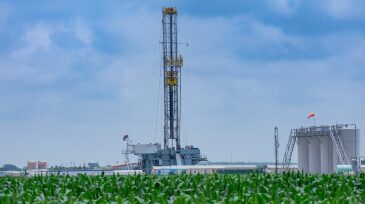
The combination will create one of the Haynesville Shale’s top gas producers, tripling Comstock’s Haynesville-Bossier acreage.
-
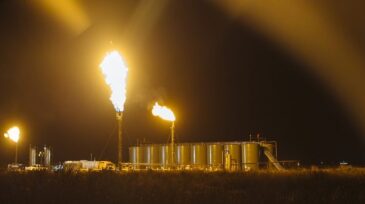
Oilfield flares are a bright indicator of rapidly rising oil production that exceeds pipeline capacity. And it raises the question: Why are oil companies in such a hurry?
-
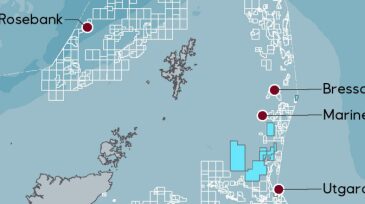
One of the largest pre-sanction fields on the UK Continental Shelf, Rosebank, could significantly bolster the company’s UK portfolio. However, the field’s water depth and harsh environment may run development costs into the multibillion-dollar range.
-
Anadarko Petroleum selects JV companies to provide EPC for the onshore LNG development. Saipem scores the biggest contract in its history. Work will begin upon FID, expected this month.
-
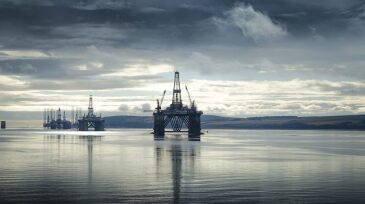
The round marked a continuation of a recent trend on the UKCS in which lesser-known firms and newcomers have gained stature, replacing more-familiar, bigger operators that have pared down their North Sea positions.
-
It is rare that businesses selling equipment to the oil and gas sector can benefit from lower oil prices. But that is the case for CRA pipe manufacturers, which are comfortably outperforming 2014 levels.
-
Although the shale sector continues to thrive, the pace of deepwater E&P is now gradually picking up.
-
The El Dorado, Arkansas-based Murphy has quickly found a home for some of the cash it will receive from the sale of its Malaysia business. The company has been rapidly expanding its US gulf footprint while simplifying its portfolio and targeting more oil.
-
The state-owned firm is looking within its home country, around Southeast Asia, and to the Americas—including shale—in an effort to maintain its forecast average yearly production of 1.7 million BOE/D over the next 5 years.