Carbon capture and storage

This SPE technical section editorial synthesizes six technical themes shaping CO2 transport and storage and interprets them through a petroleum engineering capability lens.

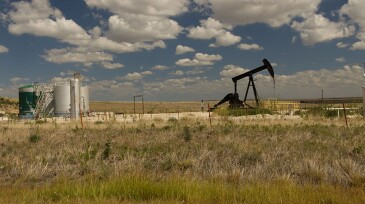
The Pawnee Carbon Sequestration Project, which would use a repurposed well, is planned to capture and store up to 400,000 tonnes of carbon dioxide, with first injection targeted for early 2027.

This paper details the importance of and value derived from a real-time process-twin model for one of the world’s largest operating carbon dioxide sequestration projects.
-
 Government grants and tax incentives will drive carbon capture, storage, and/or utilization projects in the next decade as the industry seeks profitable business model.
-
Despite more than 3 decades of intense focus on emissions issues, global emissions have only increased instead of going down. It’s imperative to question the efficacy, premises, practicality, and overlooked hurdles of current approaches.
-
Last month in North Dakota, over coffee and kuchen, my friend Dick shared his challenges with vague offers for leasing his pore space. As legal rulings and tax credits complicate the landscape, landowners face a murky world of deals. How can a proposed deal be determined as good or bad?
-
The Permian’s produced-water challenge presents an opportunity for innovation to pave the way toward a more sustainable future for the industry.
-
An economic analysis of a wellbore methodology in natural gas fields that uses gasification of methane within the wellbore (not within the reservoir) for hydrogen production while incorporating simultaneous sequestration of carbon. This new methodology offers significant energy and cost savings in addition to zero carbon being produced to the surface.
-
Definition and call for participation in the 11th Society of Petroleum Engineers Comparative Solution Project, which is motivated by the immense challenge of achieving geological carbon storage at a scale that impacts significantly atmospheric emission of carbon dioxide.
-
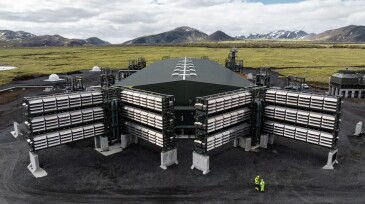
The plant is designed for a capture capacity of up to 36,000 tons of CO₂ per year once in full swing by filtering CO₂ from the air and storing it permanently underground. The company is also developing multiple megaton hubs in the US.
-
Companies are rushing to inject carbon into Louisiana’s ground, but will thousands of abandoned wells allow it to escape?
-
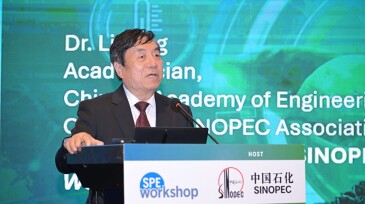
The inaugural SPE Workshop on CCUS Management in China was held in April in Qingdao. The workshop highlighted recent advances and technical challenges in CCUS management and attracted 104 attendees representing 19 organizations from eight countries.
-
To meet the objective of balancing economic prosperity, energy security, and environmental protection, a natural gas gasification process within a downhole completion tool is proposed that converts methane wells into hydrogen production wells, while simultaneously capturing the process-generated carbon downhole and reinjecting the carbon dioxide into the surrounding g…