Carbon capture and storage

This paper presents an approach for safe, efficient, and cost-effective legacy well reabandonment.

This paper presents a flexible, highly cost- and energy-efficient method of gas separation and CO₂ capture from many different gas mixtures with a large range of CO₂ concentrations.

This study explores the carbon-capture and mineralization potential of ultramafic rock powders when exposed to flue gases generated from combustion of crude oil and mesquite-derived charcoal.
-
 The research could improve climate models and inform carbon sequestration.
 -
The hub acreage is located in state waters of Cameron Parish.
-
Fourteen companies scooped up the licenses to sequester carbon in depleted oil and gas reservoirs and saline aquifers offshore UK.
-
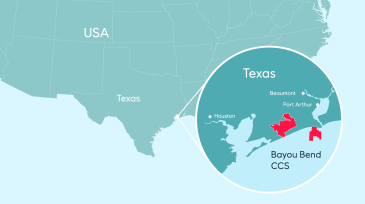
The $1-billion carbon capture project in Texas is revived after a 3-year hiatus.
-
The Habshan project aims to capture and sequester 1.5 million tonnes of carbon dioxide per year.
-
Understanding the subsurface is crucial to the success of carbon capture and storage, and digital solutions are essential for an accurate analysis of the subsurface being considered.
-
Norwegian energy company Equinor has acquired a 25% stake in the Bayou Bend CCS project from Houston-based Carbonvert.
-
Thailand's coal mining giant Banpu said it has signed an agreement to launch a third carbon capture and sequestration project in the US.
-
Decades of experience injecting fluids into the ground has revealed a fundamental truth: No two injection sites are the same. A thorough understanding of site-specific conditions is essential to ensure safe and secure long-term subsurface disposal of carbon dioxide.
-
The projects are expected to remove more than 2 million metric tons of CO2 emissions annually from the atmosphere.