Carbon capture and storage

This paper presents an approach for safe, efficient, and cost-effective legacy well reabandonment.

This paper presents a flexible, highly cost- and energy-efficient method of gas separation and CO₂ capture from many different gas mixtures with a large range of CO₂ concentrations.

This study explores the carbon-capture and mineralization potential of ultramafic rock powders when exposed to flue gases generated from combustion of crude oil and mesquite-derived charcoal.
-
 The first direct air capture facility will debut a few months late, but that’s not a big concern for its developer.
 -
Dealmaking has picked up steam, especially by Oxy. Many of the announced deals by Oxy and others are in Texas and in the Gulf Coast region.
-
Recently published research suggests that carbon dioxide stored underground will stay there for millions of years.
-
The funding is for 33 research and development projects which will tackle the technical challenges of capturing CO2.
-
Carbon capture and storage, with the potential for usage, will be crucial if the world is to prevent global warming. While Norway has been injecting captured CO2 in saline aquifers since the mid-1990s, there has been no attempt, and no plans exist, in Europe to use CO2 for EOR. Why not?
-
A new 1.0 Bcf/D facility in Baytown, Texas, is expected online no later than 2028.
-
Spending on low-carbon projects will increase by $60 billion this year, 10% higher than 2022, led by wind developments but helped by a significant rise in funding for hydrogen and carbon capture, utilization and storage infrastructure, Rystad Energy research shows.
-
A big jump in the tax incentives offered for putting CO2 in the ground, hopefully forever, has set off a mad rush to sequester CO2. But is that really the best option?
-
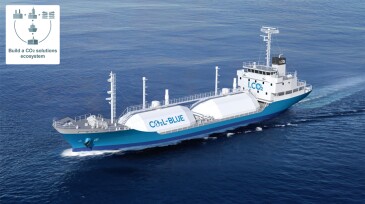
The sites with the most CO2 emissions to capture are often far from the best rock to sequester it, leading to design projects for transport ships.
-
At a time when there are many models vying to be the one used to evaluate and plan carbon storage sites, the US Department of Energy wants to test one developed by SPE members.



![JPT_2023-02_GuestEd_Essential-Features-of-the-CO2-EOR-Process[1].jpg](https://assets.spe.org/dims4/default/c0ca44d/2147483647/strip/true/crop/879x491+0+18/resize/365x204!/quality/90/?url=http%3A%2F%2Fspe-brightspot.s3.us-east-2.amazonaws.com%2Fdf%2Fbd%2F1d2a3a144d61b40dbfee45355579%2Fjpt-2023-02-guested-essential-features-of-the-co2-eor-process1.jpg)