Carbon capture and storage

This SPE technical section editorial synthesizes six technical themes shaping CO2 transport and storage and interprets them through a petroleum engineering capability lens.
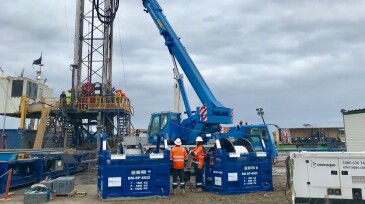
The Pawnee Carbon Sequestration Project, which would use a repurposed well, is planned to capture and store up to 400,000 tonnes of carbon dioxide, with first injection targeted for early 2027.

This paper details the importance of and value derived from a real-time process-twin model for one of the world’s largest operating carbon dioxide sequestration projects.
-
 Texas and Louisiana are stepping up efforts to assume regulatory authority for an emerging wave of carbon capture and storage projects.
-
The CStore1 project aims to prove that floating storage and injection facilities are competitive with pipelines and fixed offshore infrastructure.
-
Glynn Williams, CEO of Silixa, offers his take on the role fiber-optic technology will play in the rise of CO2 storage and on the firm’s progress in the tight-rock sector.
-
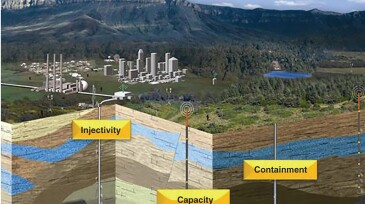
The SRMS Guidelines include suggestions for the application of the SRMS with the intent of including details of the processes of quantification, categorization, and classification of storable quantities so that the subjective nature of subsurface assessments can be consistent between storage resource assessors.
-
A North Dakota Supreme Court decision changed the rules for leasing pore space from landowners and their rights to compensation. This decision and the US Inflation Reduction Act, which significantly increases tax incentives for operators’ carbon capture and storage projects, is likely to spur other states to clarify their laws regulating pore space.
-
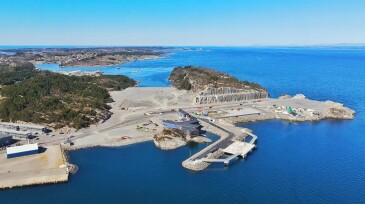
The two companies have agreed to develop a carbon capture and storage supply chain to funnel carbon dioxide produced by German industry into storage deep beneath the Norwegian Continental Shelf.
-
Consisting of a well pad and a pipeline, the storage project in the southwest of the state will be the first of its kind on land managed by the BLM.
-
Unique partnerships forward both conventional renewables and new technologies to close the gap for a carbon-free future across the globe.
-
The new-generation FPSO will minimize emissions with carbon capture and reinjection as well as energy-recovery capabilities.
-
Pending US Law Offers Big Boost to CO2 Storage Credits in Exchange for New Fees on Methane EmissionsUsing a carrot-and-stick approach, the US federal government is poised to spur the nation's oil and gas industry into doing more to combat emissions.