Carbon capture and storage

This SPE technical section editorial synthesizes six technical themes shaping CO2 transport and storage and interprets them through a petroleum engineering capability lens.

The Pawnee Carbon Sequestration Project, which would use a repurposed well, is planned to capture and store up to 400,000 tonnes of carbon dioxide, with first injection targeted for early 2027.

This paper details the importance of and value derived from a real-time process-twin model for one of the world’s largest operating carbon dioxide sequestration projects.
-
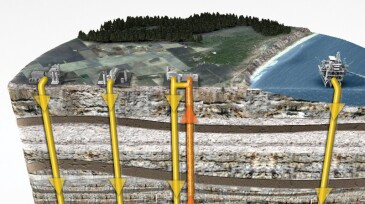
 Selling reservoirs’ empty pore space may become a new, big business.
-
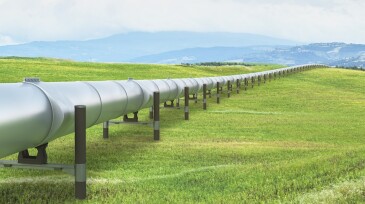
While the world focuses on carbon dioxide—its problems and its uses—many are looking at how to move it around. Fortunately, a pipeline infrastructure already exists. Unfortunately, the pipelines were made for natural gas and not enough is known about how that infrastructure can handle carbon dioxide.
-
Moji Karimi, CEO of Houston-based startup Cemvita Factory, talks about the status of oil and gas investments in the emergent technology arena of carbon capture, utilization, and sequestration.
-
Companies join forces in carbon capture project near LNG facility.
-
The international consultancy has agreed with Russia’s Rosneft to evaluate the state-owned major’s carbon capture potential.
-
Talks between the operators of a trio of competing projects remain active as Canada looks to cut emissions by 40% over the next decade.
-
The company said it expects to increase its annual carbon captured by approximately 1 million metric tons at its LaBarge facility with a $400 million investment.
-
A report from the Global CCS Institute says North America’s continued front-runner status in carbon capture and storage (CCS) deployment is largely attributable to tax credits, stronger climate commitments, and an anticipated rise in demand for low-carbon energy products.
-
The partnership aims to accelerate offshore CCS adoption with reliable, specialized CCS systems.
-
Backed by Eni and BP, the two projects have been selected by the UK government to kick-start the country's effort to decarbonize industrial emissions.