Carbon capture and storage

This SPE technical section editorial synthesizes six technical themes shaping CO2 transport and storage and interprets them through a petroleum engineering capability lens.
The Pawnee Carbon Sequestration Project, which would use a repurposed well, is planned to capture and store up to 400,000 tonnes of carbon dioxide, with first injection targeted for early 2027.

This paper details the importance of and value derived from a real-time process-twin model for one of the world’s largest operating carbon dioxide sequestration projects.
-
 Inventys is receiving $2.6 million from Natural Resources Canada through its Energy Innovation Program to support the development of a 30-tonne-per-day carbon-dioxide-capture pilot plant at Husky Energy’s Pikes Peak South Lloyd thermal project.
-
KBR announced it has been awarded the Concept and front-end-engineering-and-design contract by Statoil for its ground-breaking Northern Lights project to develop an onshore carbon dioxide storage terminal in Norway.
-
A subcommittee of the SPE Carbon Dioxide Capture, Utilization, and Storage Technical Section has published the Carbon Dioxide Storage Resources Management System document, which establishes technically based capacity and resources evaluation standards.
-
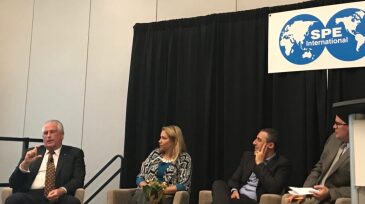
In the world of carbon capture, utilization, and storage technology, utilization is the driving factor. Three experts discussed the motivations, limitations, and challenges of CCUS at a dinner held by the Society of Petroleum Engineers CCUS Technical Section at SPE’s annual meeting.
-
In this study, several process alternatives for the permanent sequestration of carbon dioxide (CO2) as solid carbonates are evaluated.
-
The Southwest Partnership on Carbon Sequestration (SWP) is one of seven large-scale demonstration projects sponsored by the US Department of Energy.
-
This article is a summary of the 2016 follow-up paper on carbon capture and sequestration, one of the five grand challenges to the industry identified by the SPE R&D Committee in 2011.
-
In a quiet industrial park in suburban Toronto, there is a machine that eats carbon dioxide (CO2) and spits out fuel. A world away, at a world-class research institute in Bangalore, India, engineers have developed a completely different technology to convert CO2 into industrial chemicals.
-
A major oil company is progressing a portfolio of commercial-scale carbon-capture-and-storage (CCS) demonstration projects covering an array of technologies that target applications of relevance to the wider oil and gas industry.
-
In chemical-looping combustion (CLC), oxygen is transferred from an air reactor to a fuel reactor by means of a solid oxygen carrier.