Carbon capture and storage

This paper presents a flexible, highly cost- and energy-efficient method of gas separation and CO₂ capture from many different gas mixtures with a large range of CO₂ concentrations.

This study explores the carbon-capture and mineralization potential of ultramafic rock powders when exposed to flue gases generated from combustion of crude oil and mesquite-derived charcoal.

This paper presents an approach for safe, efficient, and cost-effective legacy well reabandonment.
-
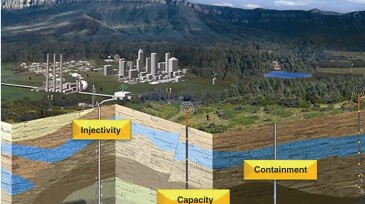
 The SRMS Guidelines include suggestions for the application of the SRMS with the intent of including details of the processes of quantification, categorization, and classification of storable quantities so that the subjective nature of subsurface assessments can be consistent between storage resource assessors.
 -
A North Dakota Supreme Court decision changed the rules for leasing pore space from landowners and their rights to compensation. This decision and the US Inflation Reduction Act, which significantly increases tax incentives for operators’ carbon capture and storage projects, is likely to spur other states to clarify their laws regulating pore space.
-
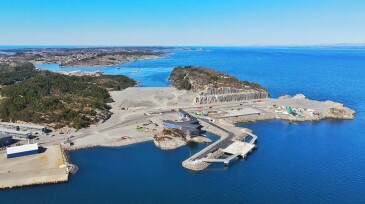
The two companies have agreed to develop a carbon capture and storage supply chain to funnel carbon dioxide produced by German industry into storage deep beneath the Norwegian Continental Shelf.
-
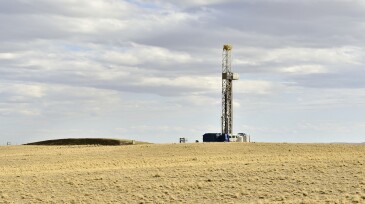
Consisting of a well pad and a pipeline, the storage project in the southwest of the state will be the first of its kind on land managed by the BLM.
-
Unique partnerships forward both conventional renewables and new technologies to close the gap for a carbon-free future across the globe.
-
The new-generation FPSO will minimize emissions with carbon capture and reinjection as well as energy-recovery capabilities.
-
Pending US Law Offers Big Boost to CO2 Storage Credits in Exchange for New Fees on Methane EmissionsUsing a carrot-and-stick approach, the US federal government is poised to spur the nation's oil and gas industry into doing more to combat emissions.
-
ExxonMobil LNG Asia Pacific will purchase 1.0 mtpa from Rio Grande LNG plant over a 20-year period.
-
Is seaweed farming a viable alternative to industrial-scale carbon capture and storage? This 3-year project off the coast of Norway aims to find out.
-
It's not just about how much resource is left in the ground. The world's super basins will also need ample access to renewable energy and carbon storage in order to remain competitive in the upcoming decades.