Casing/cementing/zonal isolation

This case study outlines a full-scale testing program focused on the behavior of thermal casing connections subjected to severe bending and low-cycle fatigue loading.

As managed pressure drilling gains traction, its principles are influencing a wider range of well-construction activities.

This paper presents a study that confirms glass-reinforced-epoxy-lined tubing as a reliable, cost-effective solution for long-term water-injection service in moderate-salinity offshore environments.
-
 This paper demonstrates a new way to create gas-tight seals during well abandonment, overcoming the limitations of traditional methods and reducing the operator’s liability and potential environmental impact after decommissioning has been completed.
 -
I am encouraged that we, as an industy, continue to refine and tweak our practices to solve zonal-isolation and cementing challenges in every well environment in which we work. As cementing techniques are improved, so, too, are the cement-evaluation methods and work flows.
-
This paper discusses shale creep and other shale-deformation mechanisms and how an understanding of these can be used to activate shale that has not contacted the casing yet to form a well barrier.
-
A major operator manages multiple deepwater projects in the Gulf of Guinea. This paper describes one of these, a recent 44-well project.
-
Well RXY is located in Cairn’s Ravva offshore field in the Krishna-Godavari Basin in India. One goal for the field was significant crude production by means of a secondary reservoir section.
-
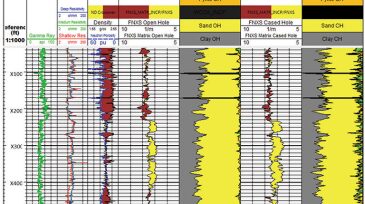
This paper compares the results of gas identification and lithology identification using pulsed-neutron spectroscopy in openhole and casedhole environments.
-
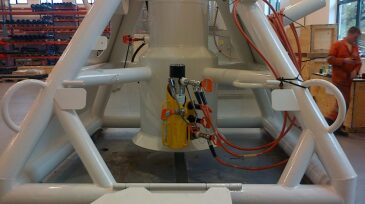
Acquiring data from an abandoned subsea well has been done before, but never quite like this.
-
The $10 million/year contract covers the inspection and mobilization of casing and tubing at two Norwegian sites and includes extenstion options in 2020 and 2022.
-
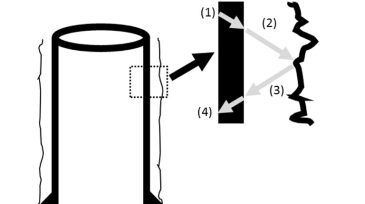
This paper reviews the technology trends in cement-job evaluation using logging tools and considers the main advantages and concerns associated with each technology.
-
As I read through the abstracts and papers that have been presented in the past year, I notice several key themes: verification of cement placement, development of new materials as a barrier, development of new additives to improve the cement barrier, and enhancement of existing techniques.