Data & Analytics

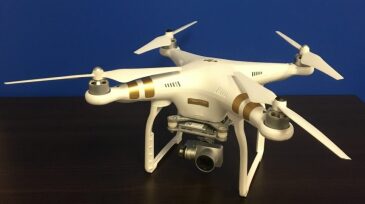
Shell has demonstrated drone-in-a-box operations from its Mars floating production unit, becoming the first operator in the region to secure FAA approval for self-approved offshore beyond-visual-line-of-sight flights. JPT Senior Technology Editor Jennifer Pallanich visited Shell Technology Center Houston to see the system in action.

Panelists at the SPE Subsea Well Intervention Symposium discussed where AI is delivering value today, where risks remain, and how engineers can best determine its usefulness.

As digital technologies become commonplace, industry leaders say core engineering knowledge remains essential for making informed decisions and avoiding costly mistakes.
-
 A startup company has created a system to create thousands of offshore development ideas by rapidly putting together components like building blocks, which its founders argue will force design teams to look outside their comfort zone.
 -
Some operating companies are now enlisting engineers as foot soldiers in their analytics army. It is not required yet, but those looking to get ahead would be wise to get involved.
-
A single-well polymer-injection and back-production test has been performed in an oil and gas field offshore Norway. The objective of the test was to verify at field conditions the properties measured in the laboratory for the biopolymer schizophyllan.
-
Wearable computers are turning heads in the oil and gas industry and appear to be on a trajectory for widespread adoption.
-
Ground sensors on assets over a broad area have limited returns on investment if the asset life cycle is less than 10 years, and obsolescence of the technology if it exceeds 10 years. Complementing sensors with aerial remote sensing at scale may help to mitigate these issues.
-
Unconventional operators are finally beginning to use to their advantage the nearly endless stream of data they’ve collected over the years. ConocoPhillips explains how it has seen real improvements in its operations by removing data friction and opening up access across typical work silos.
-
Two prominent security consultant firms estimate that energy companies, ranging from drillers to pipeline operators to utilities, invest less than 0.2 percent of their revenue in cybersecurity.
-
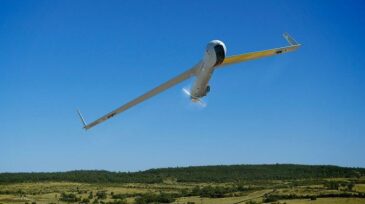
Unmanned aerial systems (UAS) are lightweight, low-cost aircraft platforms operated from the ground that can be outfitted with imaging or nonimaging payloads. UASs offer health, safety, and environment professionals a promising opportunity to reduce risks by keeping people out of harm’s way.
-
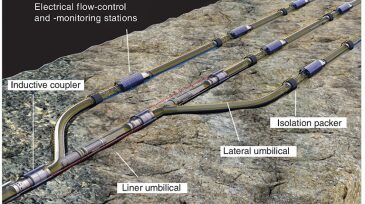
A producer and a service company have collaborated to develop a downhole system to merge multilateral technology and intelligent completions to create “smart laterals.”
-
What I find impressive is the number of people who were hiding in normal discipline jobs who are coming out of the closet with their Python scripts. And, it’s working. In many ways, order is coming to the mess, efficiency is coming to tiresome manual activities, and richness is coming to decisions.