Data & Analytics

Shell has demonstrated drone-in-a-box operations from its Mars floating production unit, becoming the first operator in the region to secure FAA approval for self-approved offshore beyond-visual-line-of-sight flights. JPT Senior Technology Editor Jennifer Pallanich visited Shell Technology Center Houston to see the system in action.

Panelists at the SPE Subsea Well Intervention Symposium discussed where AI is delivering value today, where risks remain, and how engineers can best determine its usefulness.

As digital technologies become commonplace, industry leaders say core engineering knowledge remains essential for making informed decisions and avoiding costly mistakes.
-
 With the availability of more-complex smart-well instrumentation, immediate evaluation of the well response is possible as changes in the reservoir or well occur.
 -
The complete paper evaluates optimization techniques to develop, or support, business cases for intelligent or smart wells.
-
SPE’s newly launched technical section will provide a central hub for questions, answers, discussion, collaboration, and networking around unmanned systems for the oil and gas industry.
-
Honeypots and pen testers. If these terms are unfamiliar, you’ll want to learn their roles in the safekeeping of critical evaluation and operational data in oil and gas activities, from the reservoir to the well pad to pipelines.
-
Atos, a global leader in digital services, and Siemens, a global engineering leader, announced that they have entered into a memorandum of understanding and will leverage their portfolios to help customers establish an integrated first line of defense against cyberattacks.
-
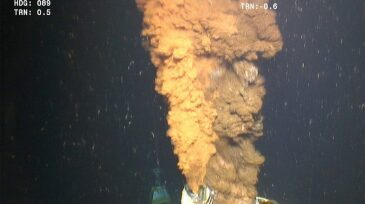
An investigator from the US National Energy Technology Laboratory examines the role remotely operated vehicles played in flow rate estimation from the Macondo well.
-
Industry CIOs examine the challenges operators and service companies face in understanding cybersecurity threats.
-
A real-time production-surveillance and -optimization system has been developed to integrate available surveillance data with the objective of driving routine production optimization.
-
This paper describes how the use of production-modeling tools, coupled with field pressure/temperature-data-acquisition systems and programming software, served as a means to improve production allocation and surveillance on a real-time basis in the Greater Angostura Field.
-
Always recorded but almost never used, the water hammer signal could offer completions engineers another set of insightful data if petroleum engineers can crack its code.