Data & Analytics

Shell has demonstrated drone-in-a-box operations from its Mars floating production unit, becoming the first operator in the region to secure FAA approval for self-approved offshore beyond-visual-line-of-sight flights. JPT Senior Technology Editor Jennifer Pallanich visited Shell Technology Center Houston to see the system in action.

Panelists at the SPE Subsea Well Intervention Symposium discussed where AI is delivering value today, where risks remain, and how engineers can best determine its usefulness.

As digital technologies become commonplace, industry leaders say core engineering knowledge remains essential for making informed decisions and avoiding costly mistakes.
-
 The authors of this paper apply a deep-learning model for multivariate forecasting of oil production and carbon-dioxide-sequestration efficiency across a range of water-alternating-gas scenarios using field data from six legacy carbon-dioxide enhanced-oil-recovery projects.
 -
This paper explores the evolving role of the digital petroleum engineer, examines the core technologies they use, assesses the challenges they face, and projects future industry trends.
-
Are we in an AI bubble? The question may seem academic to petroleum engineers who are already capitalizing on the momentum of digitalization across the industry, yet any engineer, regardless of their career stage, could be forgiven for feeling overwhelmed by the sheer scope of specialized skills now demanded in this rapidly evolving digital landscape.
-
This paper describes an auto-adaptive workflow that leverages a complex interplay between machine learning, physics of fluid flow, and a gradient-free algorithm to enhance the solution of well-placement problems.
-
This paper details a data-driven methodology applied in Indonesia to enhance flare-emission visibility and enable targeted reduction strategies by integrating real-time process data with engineering models.
-
Experience in subsurface production and lift design is shaping a new generation of geothermal operations built for reliability and scalability.
-
Switching from continuous circulation to cyclic huff-‘n’-puff operation in enhanced geothermal systems can significantly delay thermal breakthrough, sustain higher production temperatures, and improve long-term economic performance.
-
The two companies say they plan to work together to use agentic AI to increase the capabilities of technical experts.
-
This article is the first in a Q&A series from the SPE Methane Emissions Management Technical Section (MEMTS) on methane intelligence and how oil and gas teams translate emissions data into credible decisions and measurable reductions.
-
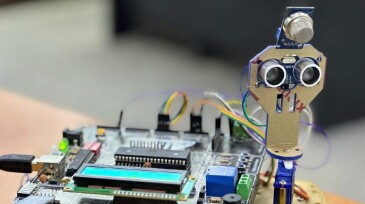
This paper presents a robot integrated with a microcontroller that provides multiple functions to help with data logging, analysis, and reporting to identify hazards and improve safety protocols.