Data & Analytics

Working with Dell Technologies and NVIDIA, the French supermajor is targeting improved seismic processing and artificial intelligence applications.

A discussion at the inaugural executive breakfast convened by the SPE Data Science and Engineering Analytics Technical Section, held alongside CERAWeek by S&P Global and powered by Black & Veatch, tackled the challenge of value creation from artificial intelligence in the energy industry.

AI‑driven data center growth is straining US power grids and accelerating interest in enhanced geothermal systems as a scalable, low‑carbon solution.
-
 DNV GL has published a paper to support the safe use of artificial intelligence. The paper asserts that data-driven models alone may not be sufficient to ensure safety and calls for a combination of data and causal models to mitigate risk.
 -
Machine learning and artificial intelligence technology offer offshore operators the chance to automate high-cost, error-prone tasks to avoid the effects of inconsistency and errors in analysis, improving efficiencies and safety.
-
Video games have been seen as a big waste of time for years by parents around the globe. But now, the oil and gas industry sees the underlying technology as a big time saver.
-
A new event is kicking off in September that will bring together the brightest minds in digital tech and oil and gas.
-
The pressure pumping giant turns to algorithms to get better fractures and fewer problems.
-
With hacking attacks mounting against US energy companies, guarding the sector will be a top priority for a new cybersecurity effort, Homeland Security Secretary Kirstjen Nielsen has said.
-
Cyberattacks on US energy systems have become unavoidable, and enough have been successful that the sector and its regulators are increasingly focused on mitigation, response, and recovery.
-
Well-interference issues can be hard to diagnose, but this startup may be figuring that out. The data-driven process it developed can also help operators come up with more effective ways to use diverters.
-
Harnessing stranded data will transform operations beyond what existing, siloed software solutions delivered. There is a clear need to be more agile and embrace cloud-based solutions to realize new capabilities.
-
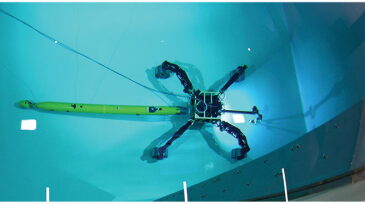
Technologies are being developed that have the potential to support marine mining in all stages from prospection to decommissioning. These developments will likely have substantial influence in the oil and gas industry, itself searching for ways to maximize exploitation of assets.