Data & Analytics

This research focuses on combining physics-based expert rules with machine learning to improve the detection of failure-related events in electrical submersible pumps.

A combination of physics principles and machine-learning techniques is used in this work to develop a virtual flowmeter for oil-production optimization in electrical-submersible-pump-lifted oil wells, resulting in reliable generalization.

This paper presents the deployment of an artificial intelligence-enabled autonomous gas lift optimization system, integrating real-time centralized advanced process control with cloud-based analytics to enhance artificial gas lift performance in producer wells.
-
 This study aims to use machine-learning techniques to predict well logs by analyzing mud-log and logging-while-drilling data.
 -
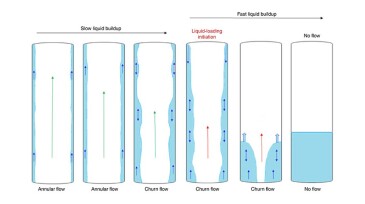
This work introduces a fast, methodical approach to detect liquid loading using easily available field data while avoiding traditional assumptions and to determine critical gas rates directly from field data.
-
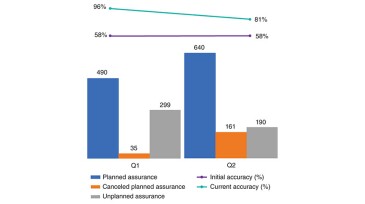
This paper describes a tool that complements predictive analytics by evaluating top health, safety, and environment risks and recommends risk-management-based assurance intervention.
-
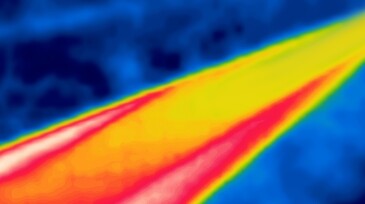
Traditionally, the drilling industry has relied on high-fidelity thermal simulators to predict downhole temperature for different operational scenarios. Though accurate, these models are too slow for real-time applications. To overcome this limitation, a deep-learning solution is proposed that enables fast, accurate prediction of downhole temperatures under a wide ran…
-
This article explores how the pursuit of a "perfect" reservoir model may be hindering progress in an industry increasingly shaped by data, uncertainty, and AI.
-
Almost all rigs, platforms, and vessels have some form of cellular mobile services, fiber, or even microwave transmission. Nevertheless, all these vessels and assets are equipped with satellite connectivity capabilities.
-
The company, as part of joint industry projects, has released an updated version of its computational fluid dynamics software that it says will aid in developing technology for the energy transition.
-
The companies are joining forces to work on large-scale industrial data collection across TotalEnergies’ operational sites, aiming to use continuous, real-time data collection to optimize performance.
-
This paper presents a smart safety monitoring system to prevent accidents in environments with moving machinery at use on various global rigs.
-
The Energy and AI Observatory aims to use up-to-date information on energy demand from data centers to determine how artificial intelligence is optimizing the energy sector.