Data & Analytics

This research focuses on combining physics-based expert rules with machine learning to improve the detection of failure-related events in electrical submersible pumps.

A combination of physics principles and machine-learning techniques is used in this work to develop a virtual flowmeter for oil-production optimization in electrical-submersible-pump-lifted oil wells, resulting in reliable generalization.

This paper presents the deployment of an artificial intelligence-enabled autonomous gas lift optimization system, integrating real-time centralized advanced process control with cloud-based analytics to enhance artificial gas lift performance in producer wells.
-
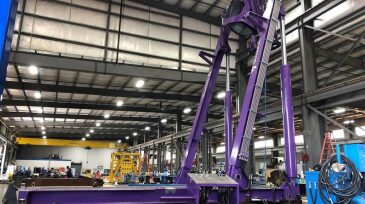
 The A-frame is DNV certified. TechnipFMC’s ROVs will deploy in GoM later this year.
 -
As the world’s top oil producers prepared for a weeklong meeting in April to plan a response to slumping prices of crude, espionage hackers commenced a sophisticated spearphishing campaign that was concentrated on US-based energy companies.
-
"Sooner or later, we will get machines that are at least as intelligent as humans are," says Christof Koch, chief scientist and president of the Allen Institute for Brain Science in Seattle, Washington.
-
As can be common in many technical fields, the landscape of specialized roles is evolving quickly. With more people learning at least a little machine learning, this could eventually become a common skill set for every software engineer.
-
To keep pace with the digital age, the critical infrastructure and automation industries are looking beyond today’s control systems for new, common technologies to help balance requirements for uptime with digital technologies. Open standards can help.
-
Increasing accuracy in models is often obtained through the first steps of data transformations. This guide explains the difference between the key feature-scaling methods of standardization and normalization and demonstrates when and how to apply each approach.
-
Rapid development of more-accurate simulator engines has given researchers the opportunity to generate sufficient data to train robotic policies for real-world deployment. However, moving from simulation to reality remains one of the greatest challenges of modern robotics.
-
Researchers have created software that borrows concepts from Darwinian evolution, including “survival of the fittest,” to build AI programs that improve generation after generation without human input.
-
The future of intelligent operations in our industry is being driven by advances from other sectors that have been embraced for petroleum applications. Foundational changes already taking place include advances in the type and volume of data being acquired and how the data are used.
-
The complete paper presents a discussion of the use of intelligent well completion in Santos Basin Presalt Cluster wells.