Data & Analytics

Working with Dell Technologies and NVIDIA, the French supermajor is targeting improved seismic processing and artificial intelligence applications.

A discussion at the inaugural executive breakfast convened by the SPE Data Science and Engineering Analytics Technical Section, held alongside CERAWeek by S&P Global and powered by Black & Veatch, tackled the challenge of value creation from artificial intelligence in the energy industry.

AI‑driven data center growth is straining US power grids and accelerating interest in enhanced geothermal systems as a scalable, low‑carbon solution.
-
 Shell has selected Bentley Systems, a provider of software and digital twin cloud services, to help streamline its capital projects and decrease time to first oil.
 -
To drive progress in the field of data science, the authors propose 10 challenge areas for the research community to pursue. Because data science is broad, with methods drawing from computer science, statistics, and other disciplines, these challenge areas speak to the breadth of issues.
-
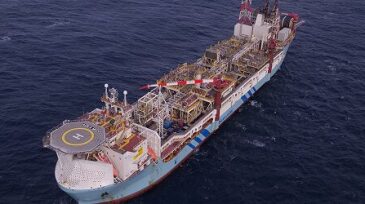
DNV GL and floating production, storage, and offloading (FPSO) vessel specialist Bluewater are undertaking a pilot project to use hybrid digital twin technology to predict and analyze fatigue in the hull of an FPSO in the North Sea.
-
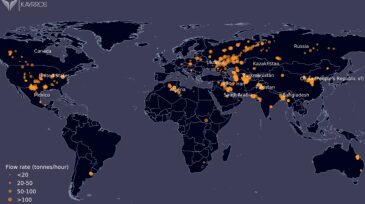
Using a European Space Agency satellite, data analytics firm Kayrros pinpointed global locations of methane emissions and recorded a 32% increase in the overall volume of methane emitted from large leaks compared with the first 8 months of 2019.
-
Deloitte discusses the “great compression” of the oil and gas industry in which companies’ room to maneuver is restricted. How can the industry avoid a talent gap and stop an organizational challenge from becoming a precarious business problem?
-
As data management (DM) moves from priority to imperative status in the beleaguered upstream industry, growing gaps between DM-mature and DM-immature organizations will determine future leaders.
-
Imagine the time when we are no longer concerned about the digital-transformation issues we face today, such as data availability, security, and many others. This would be the time when companies make the best out of digital infrastructure. This era might be here sooner than expected.
-
One year after the Johan Sverdrup field came on stream, Equinor says digital technology has proven to be key to safety and value in all parts of the operation, increasing earnings by more than $200 million.
-
Incorporating imagination into AI agents has long been an elusive goal of researchers in the space. Imagine AI programs that are able not only to learn new tasks but also to plan and reason about the future.
-
The rise of automation has been a common theme in stories that touch almost every business sector. One of the places where automation has shown the most value has been in enterprise security, where it can reduce costs and mitigate vulnerabilities in many instances.