

Decarbonization

This paper presents a flexible, highly cost- and energy-efficient method of gas separation and CO₂ capture from many different gas mixtures with a large range of CO₂ concentrations.

This study explores the carbon-capture and mineralization potential of ultramafic rock powders when exposed to flue gases generated from combustion of crude oil and mesquite-derived charcoal.

This paper presents an approach for safe, efficient, and cost-effective legacy well reabandonment.
-
 The deployment of appropriate CO2-separation technologies for natural gas processing is viewed as an abatement measure toward global CO2-emissions reduction. Selection of the optimum technology requires special attentiion.
 -
The authors discuss the results of a pilot project to capture post-combustion CO2 for purposes of EOR.
-
“Change” was the theme of Offshore Northern Seas (ONS) 2014 in Stavanger, Norway, in August. While commemorating the conference’s 40th anniversary, speakers called for changes in “business as usual.”
-
This paper discusses novel technologies for increasing the energy efficiency of offshore oil and gas platforms. Three case studies are in progress that are based on actual oil-producing platforms—two on the Norwegian Continental Shelf (NCS) and one in the Brazilian basin.
-
Several geological settings are appropriate for geological storage of carbon dioxide (CO2), including depleted oil and gas reservoirs, deep brine-saturated formations, CO2-flood enhanced-oil-recovery (EOR) operations, and enhanced coalbed-methane recovery.
-
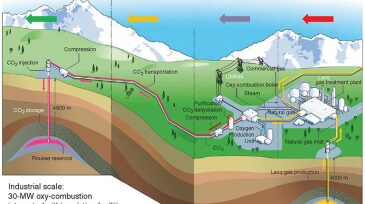
Total has been involved in CO2 injection and geological storage for more than 15 years, in Canada (Weyburn oil field) for enhanced oil recovery and in Norway (Sleipner and Snohvit fields) for aquifer storage.





Page 62 of 62