

Decarbonization

This paper describes the operator’s initiative to reduce greenhouse-gas emissions and recover additional hydrocarbon, monetizing it as sales gas, by integrating upstream and downstream gas facilities in a unified approach.

This paper highlights the effects of tax credits on business operations for midstream companies in the Permian Basin.

This paper introduces a field-deployable, trailer-mounted liquefaction system engineered to convert flared or stranded gas into low-carbon liquefied natural gas.
-
 This paper discusses novel technologies for increasing the energy efficiency of offshore oil and gas platforms. Three case studies are in progress that are based on actual oil-producing platforms—two on the Norwegian Continental Shelf (NCS) and one in the Brazilian basin.
 -
Several geological settings are appropriate for geological storage of carbon dioxide (CO2), including depleted oil and gas reservoirs, deep brine-saturated formations, CO2-flood enhanced-oil-recovery (EOR) operations, and enhanced coalbed-methane recovery.
-
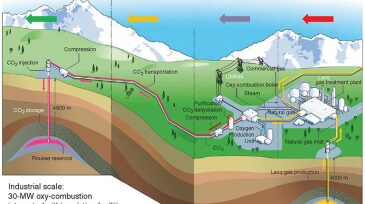
Total has been involved in CO2 injection and geological storage for more than 15 years, in Canada (Weyburn oil field) for enhanced oil recovery and in Norway (Sleipner and Snohvit fields) for aquifer storage.


Page 58 of 58