Decarbonization

This paper presents a flexible, highly cost- and energy-efficient method of gas separation and CO₂ capture from many different gas mixtures with a large range of CO₂ concentrations.

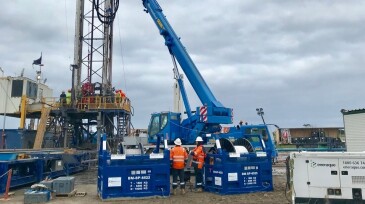
This paper presents an approach for safe, efficient, and cost-effective legacy well reabandonment.

This study explores the carbon-capture and mineralization potential of ultramafic rock powders when exposed to flue gases generated from combustion of crude oil and mesquite-derived charcoal.
-
 The $3.8-billion campaign will result in the delivery of power and decarbonization of ADNOC’s offshore production operations.
 -
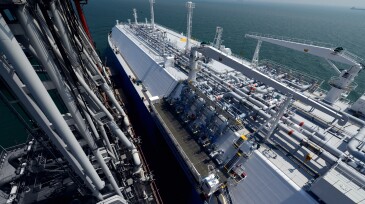
The CStore1 project aims to prove that floating storage and injection facilities are competitive with pipelines and fixed offshore infrastructure.
-
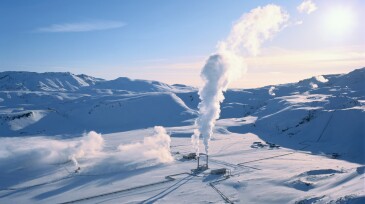
The Biden administration seeks to cut the cost of enhanced geothermal systems by 90% by 2035.
-
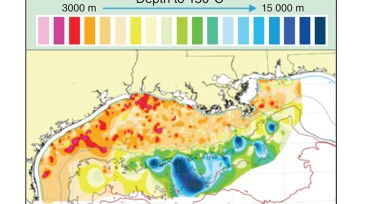
This paper presents a summary of the results of a study of the potential for repurposing legacy oil and gas facilities in the Gulf of Mexico for uses in a blue economy.
-
The authors of this paper describe a holistic approach toward integrating alternative fuels and novel prime movers into life-cycle performance of offshore vessels.
-
The Gulf’s offshore wind future is no breezy affair as governments and industries must work together to meet lofty goals.
-
Glynn Williams, CEO of Silixa, offers his take on the role fiber-optic technology will play in the rise of CO2 storage and on the firm’s progress in the tight-rock sector.
-
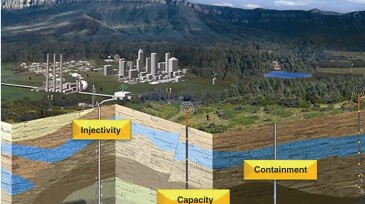
The SRMS Guidelines include suggestions for the application of the SRMS with the intent of including details of the processes of quantification, categorization, and classification of storable quantities so that the subjective nature of subsurface assessments can be consistent between storage resource assessors.
-
A North Dakota Supreme Court decision changed the rules for leasing pore space from landowners and their rights to compensation. This decision and the US Inflation Reduction Act, which significantly increases tax incentives for operators’ carbon capture and storage projects, is likely to spur other states to clarify their laws regulating pore space.
-
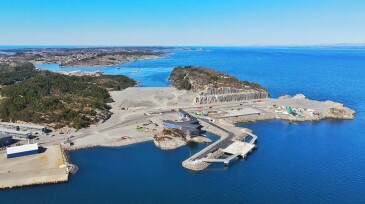
The two companies have agreed to develop a carbon capture and storage supply chain to funnel carbon dioxide produced by German industry into storage deep beneath the Norwegian Continental Shelf.