Decarbonization

This paper presents a flexible, highly cost- and energy-efficient method of gas separation and CO₂ capture from many different gas mixtures with a large range of CO₂ concentrations.

This study explores the carbon-capture and mineralization potential of ultramafic rock powders when exposed to flue gases generated from combustion of crude oil and mesquite-derived charcoal.

This paper presents an approach for safe, efficient, and cost-effective legacy well reabandonment.
-
 Exxon sets its sights on zero, while Thyssenkrupp aims squarely at hydrogen. The wind blows the world over, and the struggle to grab carbon and put it back in the ground continues. Are you trying to stay up to date about developments aimed at energy-transition efforts in our industry? This roundup of news recaps some recent announcements.
 -
The announcement means that the megascale carbon capture and storage project now has 14 large industrial players behind it. Still, it remains unclear when the project might get under way.
-
Equinor will use the semisubmersible rig Transocean Enabler, which is already under contract, for the work planned for later this year.
-
The largest oil company in the US said it's prepared to make a $15-billion down payment to achieve net-zero operational emissions by 2050.
-
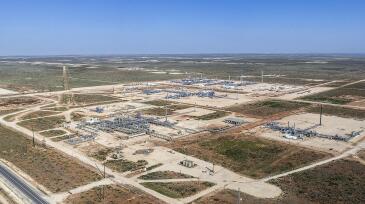
Gas processor Lucid Energy is moving forward with a plan to inject a mix of carbon dioxide and hydrogen sulfide deep below New Mexico’s portion of the Permian Basin. The project is designed to keep injecting for 30 years.
-
France expects to exceed self-imposed limits on coal usage to avoid power outages. This comes as nuclear power plants undergo maintenance and there are not enough renewable energy systems to fill the gap.
-
SPE Canada held its first carbon capture, utilization, and sequestration (CCUS) workshop in May 2021. The workshop in Calgary enabled SPE members, CCUS-focused entrepreneurs, finance providers, and policy makers to share knowledge related to emissions issues, policy, economics, technology development, and geologic considerations.
-
The authors describe a study in which leakage-rate modeling was performed to identify and evaluate the associated risks for designing a remedial action plan to safeguard a CO2 storage site.
-
The authors write that polymeric additives are effective in the design of complex systems to house important chemical reagents under challenging conditions.
-
Selling reservoirs’ empty pore space may become a new, big business.